Searches for a 5 meo dmt retreat have surged over the last two years, driven by people seeking faster relief from depression, PTSD, and existential distress than conventional psychiatry can offer. The molecule sometimes called "the God particle" or "the Toad" is now offered in dozens of settings — from underground ceremonies in California living rooms to physician-supervised programs in Mexico that integrate cardiac monitoring, screening labs, and licensed therapists.
The gap between those two worlds is enormous. This guide walks through what 5-MeO-DMT actually is, what a safe retreat looks like, what it costs, and the red flags that should make you keep looking. If you are evaluating providers right now, the structured medical model used by MindScape Retreat's physician-supervised 5-MeO-DMT and bufo alvarius treatment program is a useful reference point for what a clinical-grade retreat should include.
What Is 5-MeO-DMT?
5-MeO-DMT (5-methoxy-N,N-dimethyltryptamine) is a tryptamine compound found in the parotid gland secretions of the Sonoran Desert toad (Incilius alvarius, formerly Bufo alvarius) and in a small number of South American plants. It is structurally related to DMT and psilocybin but pharmacologically distinct — its primary action is a strong agonism of the 5-HT1A serotonin receptor, with secondary activity at 5-HT2A.
That receptor profile produces an experience that practitioners describe as fundamentally different from other psychedelics. Where psilocybin and LSD generate rich visual content and narrative, vaporized 5-MeO-DMT typically produces a near-instant dissolution of the sense of self, often without visuals — what the literature now calls an "ego-dissolution" or "non-dual" state. The peak lasts roughly 15-20 minutes, with full re-orientation inside an hour.
A 2019 observational study by Davis et al. published in the American Journal of Drug and Alcohol Abuse surveyed 362 adults who had used 5-MeO-DMT and reported that 80% endorsed improvements in depression and 79% in anxiety after a single experience — improvements that, in a meaningful subset, persisted at follow-up. Phase 2 clinical trials of synthetic 5-MeO-DMT for treatment-resistant depression are currently underway in the U.S. and Europe.
Why People Search for a 5-MeO-DMT Retreat
The single most common reason people travel for this experience is treatment-resistance. They have tried SSRIs, SNRIs, cognitive behavioral therapy, mindfulness, ketamine infusions, sometimes electroconvulsive therapy — and they still feel stuck. Other drivers include:
- End-of-life or existential distress. A growing literature suggests psychedelics can shift the way terminal patients relate to mortality.
- Stalled progress after other psychedelic therapy. Many people arrive having already worked with psilocybin or ayahuasca and feel they need a deeper experience to consolidate the work.
- Trauma, PTSD, and cPTSD. Particularly for veterans and first responders, the brevity and intensity of the experience can feel more tolerable than longer psychedelic journeys.
- Spiritual seeking. A significant minority approach the medicine for non-clinical reasons.
Regardless of the motivation, the safety considerations are the same. This is a powerful compound; it deserves a powerful container.
What a Safe 5-MeO-DMT Retreat Looks Like
A clinically sound retreat is built around three layers: medical screening, the experience itself, and integration.
1. Medical Screening and Preparation
Before any dose is administered, a credible program will require:
- A documented medical history, current medications, and recent labs (CBC, CMP, often a liver panel)
- A baseline ECG, particularly for clients over 40 or with any cardiovascular history
- A psychiatric intake to screen for personal or first-degree family history of psychosis, schizophrenia, or bipolar I — all of which are typically exclusion criteria
- A medication taper plan when SSRIs, SNRIs, or MAOIs are involved. The MAOI question is critical: combining 5-MeO-DMT with a monoamine oxidase inhibitor can produce dangerous serotonin syndrome.
If a retreat is willing to dose you without seeing labs and a medication list, that is the signal to walk away. The same standards used to evaluate any legitimate ibogaine treatment clinic — physician on-site, cardiac monitoring, written safety protocols — apply just as forcefully here.
2. The Experience
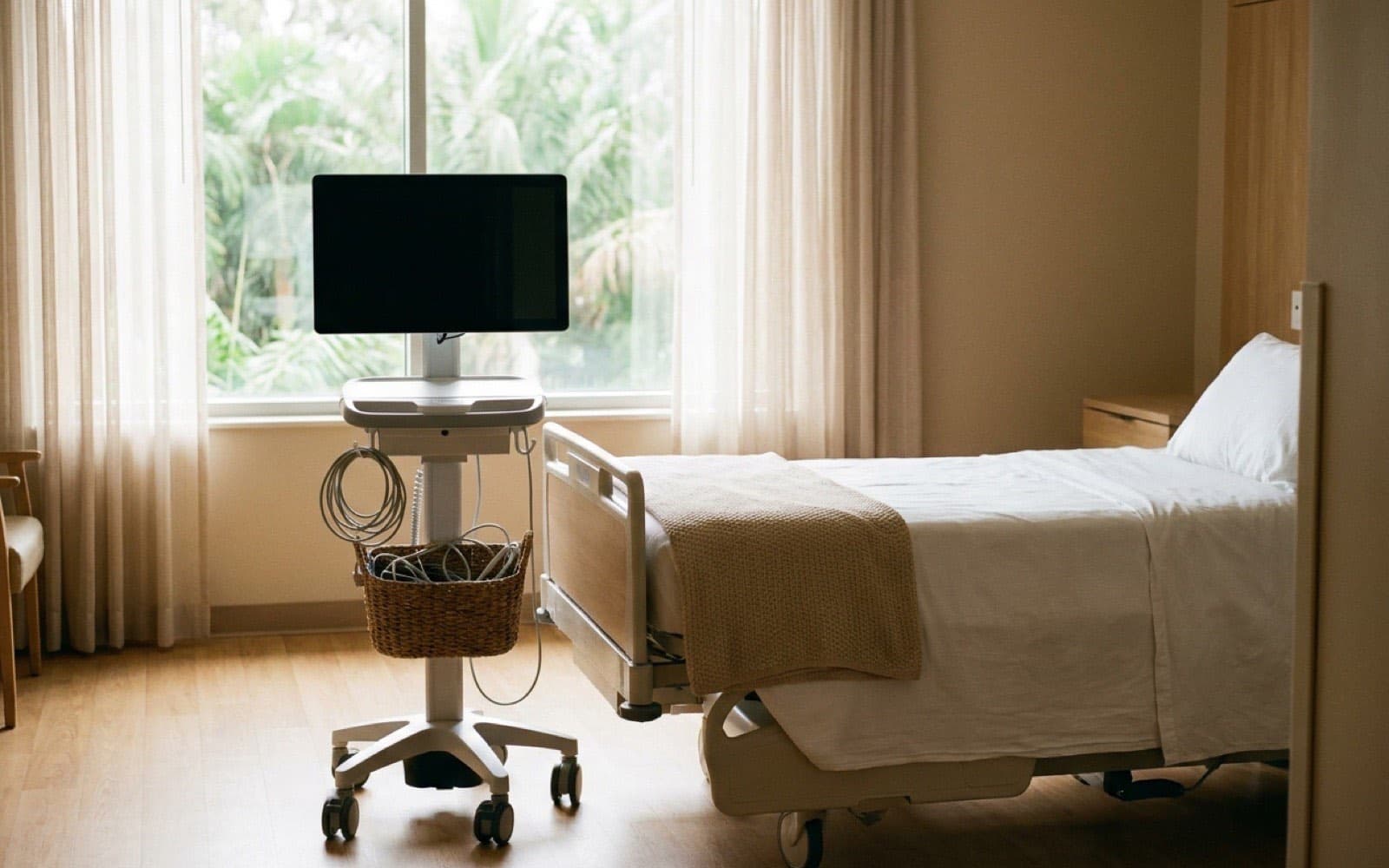
In a clinical setting, 5-MeO-DMT is typically administered via vaporization of a precisely weighed dose of either the synthetic compound or a standardized natural extract. A trained sitter and a physician are present. The client lies supine in a quiet, dimly lit room with eyeshades. A pulse oximeter and blood pressure cuff are in place. Music is minimal or absent during peak — unlike longer psychedelics, 5-MeO-DMT is so brief and so intense that external stimuli are mostly irrelevant.
Onset is within 30 seconds. The peak — the ego-dissolution phase — runs roughly 5 to 15 minutes. Most clients are conversational again within 30 minutes. Many programs offer the option of a second or third session over the course of the retreat, with at least 24 hours between doses.
3. Integration
Integration is the work of translating an ineffable experience into durable behavioral change. A real program includes:
- One-on-one sessions with a licensed therapist before and after each dose
- Group integration circles
- A written integration plan covering sleep, exercise, social contact, journaling, and follow-up therapy at home
- Some programs, including those that pair 5-MeO-DMT with neuroplasticity-enhancing protocols, build integration around the documented mechanism of action of these psychedelic compounds so clients understand the biological window they are working inside
A retreat that ends when the last ceremony ends, with no integration plan, is leaving the most important work undone.
How Much Does a 5-MeO-DMT Retreat Cost?
Pricing varies more than almost any other category of psychedelic care.
| Tier | Typical Cost (USD) | What's Included |
|---|---|---|
| Underground / informal ceremony | $300 – $1,500 | One dose, no medical screening, no integration. Real but significant safety risk. |
| Standalone retreat, group format | $3,500 – $7,500 | 2-4 days, group setting, minimal medical screening, basic integration. |
| Clinical group program | $7,500 – $15,000 | Pre-treatment labs, physician supervision, group sessions, structured integration. |
| Private medical program | $15,000 – $35,000+ | Full medical workup, private suite, dedicated physician and therapist, 7-10+ days, often combined with other modalities (ibogaine, NAD+, IV therapy). |
Why such a wide range? Because "5-MeO-DMT retreat cost" is really a question about what is included — beds in a shared room versus a private suite, a facilitator with a weekend certificate versus an anesthesiologist and a licensed psychiatrist, three days versus ten. The cheapest option is rarely the cheapest in the long run; an ER visit because nobody screened your medications can erase a decade of savings.
For U.S.-based searchers asking about a 5-meo-dmt retreat Florida, 5-meo-dmt retreat California, or simply a dmt experience near me, the legal reality is that 5-MeO-DMT remains a Schedule I controlled substance under federal law. Programs operating in the U.S. are doing so either under religious exemption (limited to specific churches) or in jurisdictions with local decriminalization, and they generally lack the medical infrastructure of programs in countries where the compound is unscheduled or legally administered in a medical context — including Mexico, where retreats in Cozumel and the Riviera Maya operate openly with on-site physicians.
What to Look for in a Retreat
Use this as a checklist before you wire a deposit:
- Is a licensed physician on-site for every session? Not on-call. On-site.
- Do they require labs and an ECG before treatment? If they do not, leave.
- Do they have written contraindication and emergency protocols? Ask to see them.
- What is their medication interaction policy? SSRIs, MAOIs, lithium, and tramadol all matter.
- Who is providing integration, and what are their credentials? "Shaman" is not a credential in any regulatory sense.
- What is their cardiac and respiratory monitoring during dosing? Pulse oximeter and BP cuff are the minimum.
- What happens if something goes wrong? Distance to the nearest hospital, on-site emergency medications, and staff training in advanced cardiac life support.
- Do they over-promise outcomes? "100% cure" claims are a red flag in every direction.
Combining 5-MeO-DMT With Other Modalities
Some of the most experienced programs in Mexico now offer 5-MeO-DMT alongside ibogaine, particularly for clients working with addiction, PTSD, or long-term depression. The clinical theory is straightforward: ibogaine produces a long, autobiographical, often visionary process that surfaces material; 5-MeO-DMT, administered 24-72 hours later, can help integrate that material at a level that feels somatic rather than narrative.
This combined protocol is not appropriate for everyone, and it requires even more rigorous cardiac screening than either compound alone. But for the right candidate, it can be the difference between a powerful experience and a durable change.
If you are exploring this path, request a free clinical consultation and review the program's full safety protocols before you commit. The team at MindScape can also walk you through whether a combined ibogaine and 5-MeO-DMT program in Cozumel is appropriate for your medical history.
Final Word
A 5-MeO-DMT retreat is not a vacation, and it is not a ceremony you should book by Instagram DM. Done well, with the right screening and the right integration, it is one of the most powerful interventions in modern psychiatric medicine. Done poorly, it is dangerous. The single best predictor of outcome is the rigor of the container — choose accordingly.
Begin Your Journey
MindScape Retreat offers medically supervised ibogaine treatment in Cozumel, Mexico. Speak with our clinical team to learn if you are a candidate.
A guided one-day 5-MeO-DMT (Bufo) session starts at $1,450, and a guided ceremony is already included in every ibogaine program: see the one-day program or start free medical prescreening.