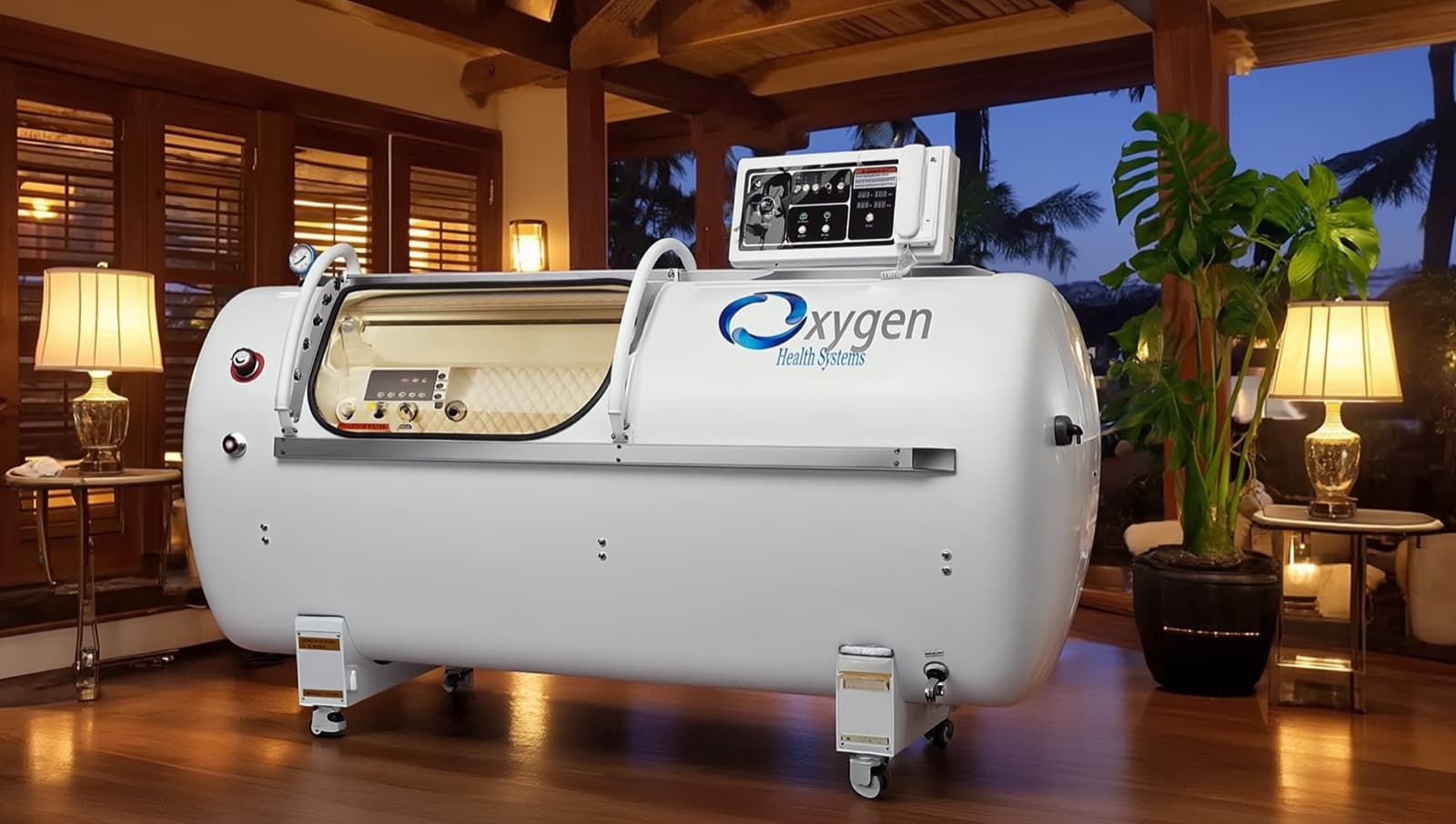
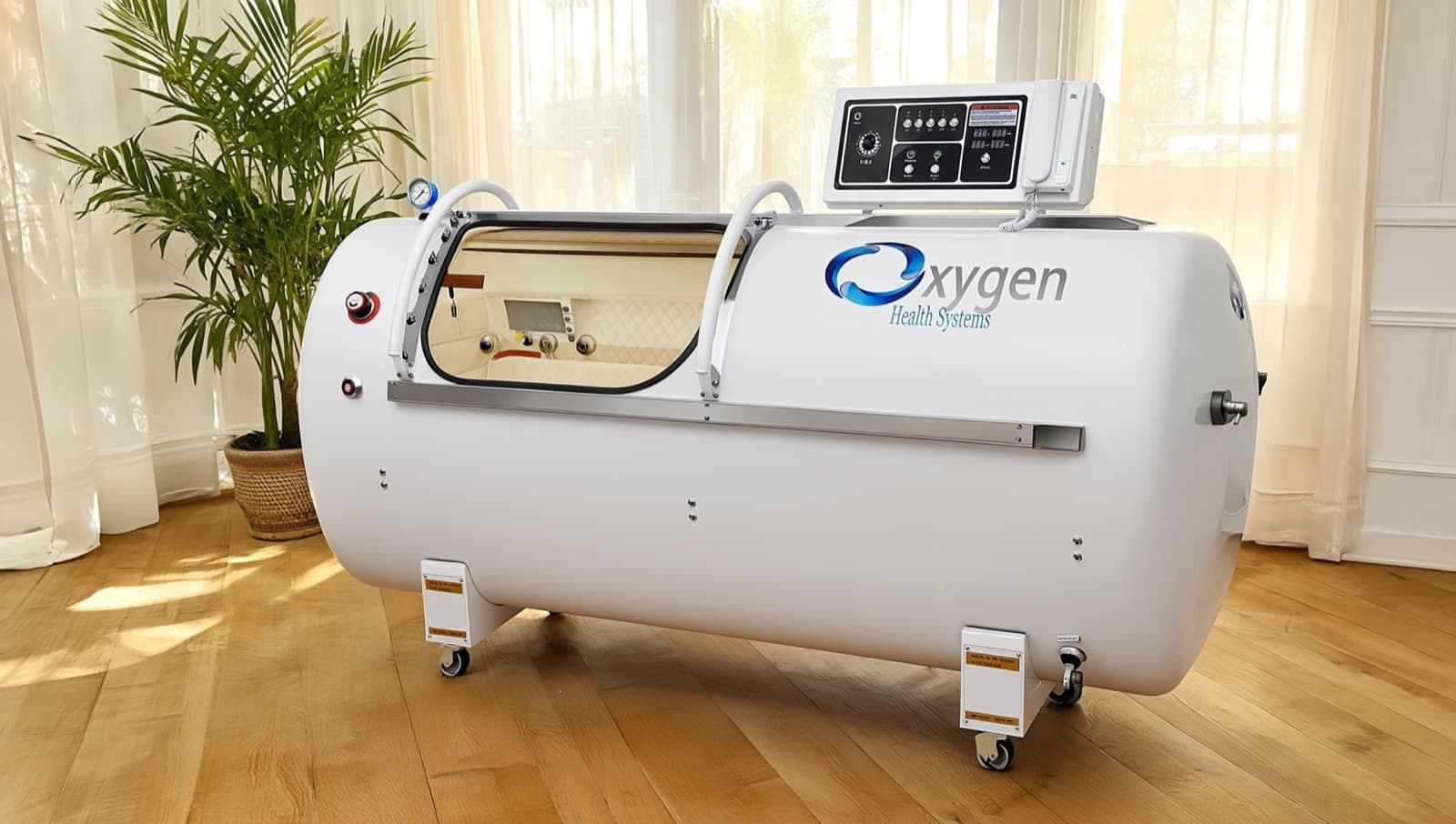
Chambers arrive at all three residences this October

Hyperbaric Oxygen and Ibogaine:
The Evidence, Honestly

Most clinics adding a chamber tell you it makes everything work better. Nobody has actually studied that. Here is what the research does show — claim by claim, limit by limit — and how our physicians will sequence pressure around your treatment so the two never meet inside the cardiac window.

Two literatures, kept honest

Pressurized oxygen and ibogaine each have real research behind them — trials, mechanisms, and open questions. We cite each on its own evidence and never let one borrow the other's results.

One window of time

Ibogaine's pharmacology continues for days after a session — a window our physicians already navigate with telemetry. Chamber hours are placed inside your stay only after that window closes for you.

Zero combined trials — so we measure

No registered trial has studied the combination. Instead of pretending otherwise, every guest's stay is scored on validated instruments before, during, and after — so what we eventually report is what we saw.

The science we are building on

A window after treatment, and a technology that may speak to it

Newly drafted — awaiting clinical team review

What ibogaine starts

In Stanford's 2024 Nature Medicine cohort, veterans showed large one-month improvements across disability, PTSD, depression, and anxiety scales after a magnesium-ibogaine protocol — findings the authors themselves call preliminary, because the study had no control group. A 2025 EEG follow-up found brain-rhythm changes still present a month later.

Preclinical work sketches the why: in animals and cell cultures, ibogaine engages growth-factor signalling (GDNF) that can sustain itself after the compound is gone, and its long-lived metabolite keeps working for days. That is the "window" — days after treatment when biology appears unusually ready to change, and when integration work is scheduled anyway.

What pressurized oxygen brings

Breathing concentrated oxygen under pressure raises the oxygen dissolved in plasma many-fold — plain physics. Around that fact sits a real research program: a sham-controlled trial in chronic wound care, a randomized trial in veterans with PTSD using long daily hard-chamber courses, stem-cell mobilization measured in blood, and a proposed "hyperoxic-hypoxic paradox" by which intermittent oxygen swings switch on repair biology.

Each of those findings carries limits we print right next to it — doses far longer than a retreat stay, trials without sham arms, biomarkers that are not benefits. The ledger below holds all of it, linked to PubMed.

Put together, that is a rationale — not a result. Two modalities that each appear to speak the language of neuroplasticity, offered in the same quiet weeks, under the same medical team. Whether the pairing adds anything measurable is exactly the question our instruments are built to answer.

This section follows our published screening criteria but has not yet completed review by our clinical team. It is educational, not medical advice.

Safety is the schedule

Why the chamber opens only after your window closes

Newly drafted — awaiting clinical team review

Ibogaine lengthens the heart's QT interval for hours to days. Chamber sessions nudge the same interval through a slower heart rate. Nobody has studied the overlap — so at MindScape the overlap simply never happens. Tap through what that means for a stay:

The chamber stays closed

Through your session and the continuous cardiac telemetry that follows it, chamber use is off the table — a pressurized chamber is the wrong place for a monitored heart, and resuscitation access inside one is slower by design. Your monitor strap does its work; the chamber waits.

Illustrative — your physicians set your actual schedule

This section follows our published screening criteria but has not yet completed review by our clinical team. It is educational, not medical advice.

The evidence ledger

Every claim, with its limits attached

Other pages name studies. We link them, badge the study design, and print what each one does not show — because a citation without its limits is just a decoration.

Newly drafted — awaiting clinical team review

Breathing concentrated oxygen under raised pressure sharply increases the oxygen carried dissolved in blood plasma (Henry's Law), letting oxygen reach tissue independently of red blood cells — a 2021 review describes an increase in oxygen diffusion into circulation of more than tenfold.

MechanismOrtega et al., Medicina (Kaunas), 2021

What this does not show

This is physics and physiology, not a clinical benefit. More dissolved oxygen is not, by itself, evidence that anyone feels or functions better.

Read the source (PMID 34577787)

The leading proposed explanation for why intermittent pressurized oxygen may trigger regenerative biology is the "hyperoxic-hypoxic paradox": repeated rises and falls in oxygen level appear to be read by cells like an oxygen shortage, switching on repair cascades normally reserved for low-oxygen states.

MechanismHadanny & Efrati, Biomolecules, 2020

What this does not show

A hypothesis paper — and its authors disclose commercial ties to a hyperbaric clinic company. A plausible framework, not an established fact.

Read the source (PMID 32630465)

A University of Pennsylvania study found a single two-hour session at 2.0 atmospheres doubled circulating CD34+ stem and progenitor cells in humans, rising roughly eightfold over a 20-session course.

MechanismThom et al., Am J Physiol Heart Circ Physiol, 2006

What this does not show

A blood biomarker, not an outcome — a higher circulating cell count is not proof anyone healed faster. Note the dose: 2.0 atmospheres, a clinical hard-chamber pressure.

Read the source (PMID 16299259)

Oxygen dose is pressure-dependent: in 142 wound patients, among those whose tissue oxygen did not reach target at 2.0 atmospheres, 41 percent reached it when pressure was raised to 2.4 — chamber pressure materially changes what tissue receives.

Cohort / open-labelHeyboer et al., Undersea Hyperb Med, 2018

What this does not show

A retrospective wound-care series. Its value here is the dose principle itself: evidence generated at one pressure cannot be borrowed by a chamber run at another.

Read the source (PMID 30241117)

The strongest randomized evidence for pressurized oxygen remains outside the brain: in a double-blind, placebo-controlled trial of 94 patients with chronic diabetic foot ulcers, 52 percent of the oxygen group achieved full ulcer closure at one year versus 29 percent given pressurized air.

Randomized trialLöndahl et al., Diabetes Care, 2010

What this does not show

A wound-care population nothing like retreat guests. It establishes that this is a real medicine with a genuine sham-controlled trial behind it — not that the effect transfers to mood, brain, or post-treatment rest.

Read the source (PMID 20427683)

In a 2024 randomized, sham-controlled trial of veterans with combat-associated PTSD, 60 daily sessions at 2 atmospheres lowered the mean CAPS-5 symptom score from about 43 to 26, while the sham group's score did not improve.

Randomized trialDoenyas-Barak, Efrati et al., J Clin Psychiatry, 2024

What this does not show

Fifty-six completers at a single centre, all male — and the dose was 60 daily 90-minute hard-chamber sessions over ~12 weeks, a protocol far longer than any retreat stay. Its senior author is the same researcher whose hypothesis paper above discloses commercial ties to a hyperbaric clinic company. Encouraging signal; not a promise about shorter exposure.

Read the source (PMID 39566051)

A randomized crossover trial in 56 people with post-concussion symptoms one to five years after mild head injury reported better cognitive function and quality of life after 40 sessions at 1.5 atmospheres, with no change during the untreated control period.

Randomized trialBoussi-Gross et al., PLoS One, 2013

What this does not show

No sham arm — the control was no treatment, so participants knew when they were being treated. The neuroplasticity conclusion is contested for exactly this reason.

Read the source (PMID 24260334)

The U.S. FDA has cleared hyperbaric chambers for a specific list of thirteen conditions — decompression sickness, carbon monoxide poisoning, certain wounds and infections among them. Supportive rest-and-recovery use at a retreat is not among the cleared indications, and we say so plainly.

Regulatory factU.S. Food & Drug Administration, consumer update

What this does not show

Clearance describes the device class and specific medical indications in the United States. Our chambers are a wellness amenity of a Mexican clinic; they are not offered as a treatment for any of the conditions above.

Read the source

In Stanford's 2024 Nature Medicine report, 30 male Special Operations veterans with mostly mild traumatic brain injury showed large one-month improvements in disability, PTSD, depression, and anxiety scales after a magnesium-ibogaine protocol, with no serious adverse events in that screened, monitored cohort.

Cohort / open-labelCherian, Williams et al., Nature Medicine, 2024 (MISTIC)

What this does not show

Open-label and uncontrolled: no placebo group, 30 self-selected veterans. The authors themselves call the findings preliminary and call for controlled trials. The protocol did not include pressurized oxygen — this study cannot support a combination claim.

Read the source (PMID 38182784)

A 2025 follow-up in Nature Mental Health measured brain activity by EEG before and after magnesium-ibogaine in the same veteran cohort and found changed brain rhythms that persisted at one month and tracked with improvements in executive function, PTSD, and anxiety.

Cohort / open-labelNature Mental Health, 2025 (Stanford)

What this does not show

Correlational, single-arm, open-label. It is the best objective human hint that a weeks-long changed brain state follows treatment — the empirical anchor for the "window" idea — but it does not prove what causes what.

Read the source

In rodent work, a single dose of ibogaine increased GDNF — a growth factor for dopamine neurons — in the midbrain, and blocking GDNF there blunted ibogaine's effect on alcohol self-administration, tying the compound's action to neurotrophic signalling.

PreclinicalHe et al., Journal of Neuroscience, 2005

What this does not show

Rats, in an alcohol model. It says nothing about human dosing or human outcomes.

Read the source (PMID 15659598)

Cell-culture work suggests why a brief exposure could have a long tail: ibogaine triggered a self-reinforcing loop in which GDNF drives more of its own expression — a proposed mechanism for a durable neurotrophic state outlasting the drug.

PreclinicalHe & Ron, FASEB Journal, 2006

What this does not show

A dish, not a person. The strongest mechanistic rationale for a "window" — and only that.

Read the source (PMID 17023388)

Ibogaine's active metabolite, noribogaine, is eliminated slowly — a placebo-controlled Phase I study measured half-lives of 28 to 49 hours — so the pharmacology continues for days after a single treatment.

MechanismGlue et al., J Clin Pharmacol, 2015

What this does not show

A safety and pharmacokinetics study in healthy volunteers at low doses. It times the window; it does not measure benefit inside it.

Read the source (PMID 25279818)

As of August 2026, the U.S. ClinicalTrials.gov registry lists nine studies involving ibogaine — and zero studying ibogaine together with pressurized oxygen. No registered trial of the combination exists anywhere in that registry.

Regulatory factClinicalTrials.gov registry query, 2026-08-25

What this does not show

Registries are not exhaustive and counts change. But this is why no honest clinic — including ours — can tell you today that the combination produces better outcomes.

Read the source

The best-known ibogaine outcome study — Stanford's MISTIC protocol — did not include pressurized oxygen among its adjuncts; the word "hyperbaric" does not appear in the paper.

Cohort / open-labelNature Medicine, 2024

What this does not show

Which means its results cannot be borrowed to sell a combination. We cite each modality's own evidence and keep them separate until combined data exist.

Read the source (PMID 38182784)

Ibogaine lengthens the heart's QT interval: in 14 monitored patients given a therapeutic dose, the interval lengthened by an average of 95 milliseconds, half the group crossed the 500-millisecond threshold, and in 6 of 14 the effect lasted beyond 24 hours.

Cohort / open-labelKnuijver et al., Addiction, 2022

What this does not show

Fourteen patients at one hospital, at a dose protocol that is not ours. What it establishes is the shape of the caution window — hours to days, and different for every patient — which is why clearance is individual, never scheduled by default.

Read the source (PMID 33620733)

Pressurized oxygen has its own cardiac signature: the most common conduction change observed during chamber sessions is a lengthened QT interval, arising from oxygen-induced slowing of the heart rate — benign in healthy users, unstudied on top of ibogaine's window.

MechanismStatPearls, HBOT side effects (NBK482231)

What this does not show

In routine chamber practice this effect is described as minimally consequential. Layered on a patient still inside ibogaine's cardiac window, it is an interaction no one has studied — so we simply never allow the two to overlap.

Read the source (PMID 29489293)

Resuscitation inside a pressurized chamber is materially harder than at a bedside: defibrillators are kept outside for fire safety, and a chamber must decompress — several minutes even under best practice — before a team can reach the person inside.

MechanismScand J Trauma Resusc Emerg Med, 2023

What this does not show

Written about chamber practice generally, not about ibogaine. It is the decisive reason chamber time belongs after the monitored treatment window, never during it.

Read the source (PMID 37872558)

The most common side effect of chamber sessions is middle-ear barotrauma — ear-pressure injury — which a five-year hospital series observed in about one in ten patients, and which unhurried pressurization and simple ear-clearing techniques are used to prevent.

Cohort / open-labelEdinguele et al., Undersea Hyperb Med, 2020

What this does not show

A hospital population older and sicker than retreat guests, so the rate is not ours to borrow. The honest point stands: gentle ears-first pressurization is a protocol choice, not a marketing line.

Read the source (PMID 32574438)

Study-design badges describe how each study was run — a randomized trial outranks a cohort, a cohort outranks a dish. Sources open at PubMed or the publisher. None of these studies tested our program, and none tested the combination.

This section follows our published screening criteria but has not yet completed review by our clinical team. It is educational, not medical advice.

Newly drafted — awaiting clinical team review

Why we won't tell you it works better together — yet

The chambers arrive this October. As of August 2026 there is no registered trial of ibogaine combined with pressurized oxygen anywhere in the ClinicalTrials.gov registry, and the landmark Stanford study did not include it. Clinics elsewhere already bundle the two and let the implication do the selling. We think you deserve the sentence they leave out: no one knows yet whether the combination adds anything.

What we can do is find out honestly. Every MindScape guest is already scored on validated instruments — WHO-5, PHQ-9, GAD-7 among them — before arrival, through the stay, and after departure. Chamber use will be recorded alongside. When enough stays have been measured, we will report what the numbers say, whatever they say.

— The MindScape clinical team · drafted August 2026, ahead of the October installation

This section follows our published screening criteria but has not yet completed review by our clinical team. It is educational, not medical advice.

What the FDA has — and hasn't — cleared

In the United States, hyperbaric chambers are cleared for a specific list of thirteen medical conditions — decompression sickness, carbon monoxide poisoning, and certain wounds and infections among them. Supportive use at a retreat is not on that list.

We tell you that up front because trust is built in the fine print: our chambers are a wellness amenity of a physician-supervised clinic in Mexico — offered alongside the medical program, never as a treatment claim.

Newly drafted — awaiting clinical team review

Who the chamber is not for

Some histories mean the chamber stays closed even after treatment: certain lung conditions and any history of collapsed lung, recent ear surgery or injury, an active fever or heavy cold, pregnancy, and claustrophobia that a wide window and an open intercom cannot ease. The most common side effect anywhere chambers are used is ear-pressure discomfort, which unhurried, ears-first pressurization is designed to prevent.

These are screening conversations, not medical conclusions — your pre-screen and our physicians settle what is right for you, and guests screened out of chamber use are told exactly why.

This section follows our published screening criteria but has not yet completed review by our clinical team. It is educational, not medical advice.

24/7 Medical Monitoring

Monitored From the Moment You Arrive

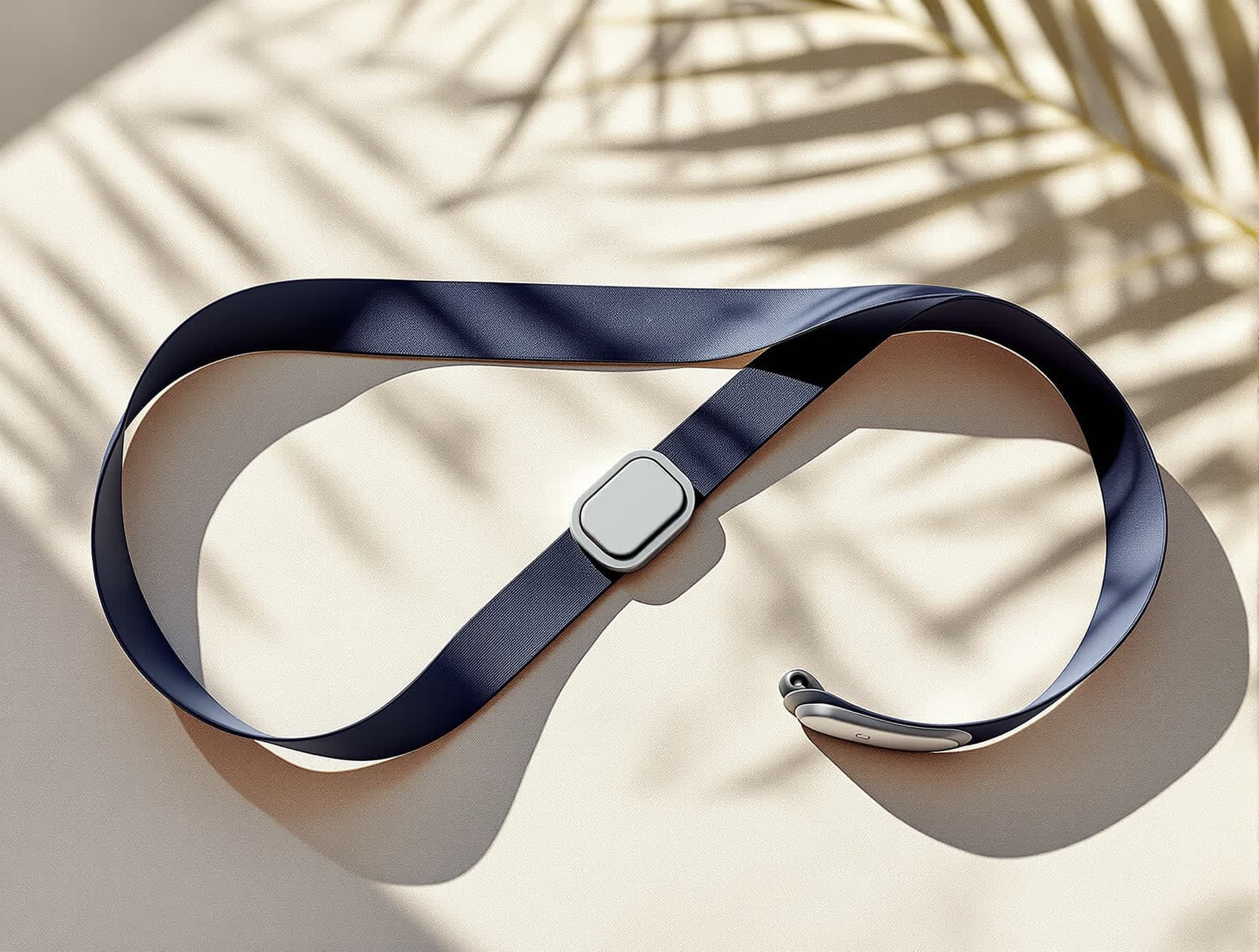
On the day you arrive, our clinical team fits you with a chest monitor strap built on technology we developed ourselves. From that first hour until discharge, it streams your heart rhythm and vitals to the medical team on site — so you are monitored 24/7, before, during, and after treatment.

Fitted the day you arrive

Your chest monitor strap goes on during arrival intake — before any treatment begins — and stays with you through your stay.

Our own technology, built in-house

Your monitor runs on technology MindScape developed itself — hardware and software purpose-built for continuous care around the clock during your stay.

Read by clinicians, 24/7

Your cardiac rhythm and vitals stream in real time to the physicians and nurses on site around the clock — day and night, not just during sessions.

See the full cardiac safety protocol
Patient resting at the MindScape clinic wearing the chest monitor strap while physicians review his telemetry on a tablet
The MindScape chest monitor strap and its sensor pod

The chest monitor strap — comfortable enough to sleep in, built so your care team can keep watch over your heart through your stay.

Measured & safe

Recovery you can track. Safety you can trust.

Our data platform measures your progress before, during, and after your stay, while our medical team looks after your safety in person at every step. The same picture that guides your care is the one that shows it worked.

Measured before you arrive

Validated instruments build your baseline before you travel.

Safety, in person, throughout

Our medical team is with you around your session — and a chest monitor strap streams your vitals to them whenever you're in our care, on technology we built ourselves.

Outcomes visible to you

Your progress re-scored against your baseline, in your portal.

Take it with you

The overview, as a document worth keeping

The same claims, the same citations, the same limitations — typeset for reading offline or sharing with a family member or physician. No email required.

Download the overview (PDF)

Version 1.0 · August 2026 · drafted ahead of the October installation, pending clinical team review

Asked plainly, answered plainly

Newly drafted — awaiting clinical team review

No — and that is deliberate. Ibogaine lengthens the heart's QT interval for hours to days (measured in monitored patients in Knuijver et al., Addiction 2022, PMID 33620733), pressurized oxygen has its own mild QT effect (StatPearls NBK482231), and nobody has studied the two together. Resuscitation inside a chamber is also slower by design, because the chamber must decompress before a team can reach you. So chamber sessions open only after your physician reads your telemetry and clears you individually — there is no fixed timetable.

Yes. Once our medical team clears chamber use for your program, sessions are unlimited and included in your stay — no session caps and no added fees. Your care team fits chamber hours around treatment, integration, and rest. Guests whose screening rules the chamber out are told exactly why.

Honestly: nobody knows yet, and we will not pretend otherwise. As of August 2026 the ClinicalTrials.gov registry lists no trial of the combination, and Stanford's landmark magnesium-ibogaine study (Nature Medicine 2024, PMID 38182784) did not include hyperbaric oxygen. Each modality has its own literature — that is what our evidence ledger cites, limitation by limitation — and our measurable-recovery program scores every guest on validated instruments before, during, and after their stay, so when the chambers have real use behind them we can report what we see rather than what we hoped.

The model we have ordered is a hard-shell monoplace chamber with a wide viewing window and a quilted interior — you rest on a mattress inside, in sight of the room, with an intercom to your care team. One chamber is being installed at each of our three residences this October: Casa Selva, The Hacienda, and the Oceanfront Residence. We will publish the full operating protocol — pressures, session lengths, and supervision — once our clinical team finalizes it at installation.

The U.S. FDA has cleared hyperbaric chambers for a specific list of thirteen medical conditions — decompression sickness and carbon monoxide poisoning among them. Supportive use at a retreat is not on that list, and we say so on the page rather than in a footnote. Our chambers are a wellness amenity of a physician-supervised clinic in Mexico, offered alongside — never as a substitute for — the medical program itself.

This section follows our published screening criteria but has not yet completed review by our clinical team. It is educational, not medical advice.

The honest way to find out if this is right for you

It starts the way everything here starts: a confidential pre-screen, reviewed by the medical team, and a treatment plan you can see in your portal — chamber time included where your physicians place it.

Start your confidential pre-screen

Plain-language notices

This page is educational and is not medical advice; nothing here replaces a consultation with a physician. Treatment at MindScape Retreat is provided in Cozumel, México; ibogaine is not an FDA-approved medication, and hyperbaric chambers are not FDA-cleared for the supportive retreat use described here. Individual experiences vary and no outcome is guaranteed. Cited studies describe their own populations and protocols, not MindScape's program. If you are in crisis in the United States, call or text 988 (Suicide & Crisis Lifeline) or call 911.