Ibogaine is a Schedule I substance in the United States and is not an approved medicine in Canada, the UK, or the EU. In Mexico it is not a scheduled substance, which means licensed physicians can administer it in a clinical setting. That is why almost every medically supervised ibogaine program in the world is in Mexico, and why this search is usually the second one a patient or family makes after learning they cannot get treatment at home.
- Unscheduled is not the same as approved. No regulator anywhere, including Mexico's COFEPRIS, has authorized ibogaine as a medicine. It is investigational. The quality of your treatment depends entirely on the physicians and protocol you choose.
- The risk is cardiac, and it is manageable, not optional. Ibogaine prolongs the QT interval. A program without a 12-lead EKG before you fly, a physician on site, and continuous cardiac monitoring during the dose is not a program you should consider.
- A medically supervised program costs from $7,500 all-inclusive for the 5-day retreat and from $8,500 for the 7-day clinical program at MindScape Retreat in Cozumel. Condition-specific programs run 10 to 14 days. No hidden medical fees.
If you already know the basics, start the confidential medical pre-screen. It is free, a physician reviews your history, and nothing is booked until they have. Versión en español.
Legal Status
Is Ibogaine Legal in Mexico?
Yes, in the specific sense that matters: ibogaine is not listed in the controlled-substance schedules of Mexico's General Health Law (Ley General de Salud). A licensed Mexican physician who administers it to a consenting adult in a clinical setting is practicing within Mexican medical law.
What that does not mean is just as important. It does not mean ibogaine is a registered or approved medicine in Mexico: there is no COFEPRIS marketing authorization for an ibogaine product, just as there is no FDA approval in the United States. And it does not mean every ibogaine center in Mexico is a clinic. Because the substance is unscheduled rather than regulated as a drug, the floor is set by general medical licensing, not by an ibogaine-specific standard. A facility with no physician on site is not breaking a Mexican ibogaine law; there isn't one. It is simply unsafe.
It also does not change your legal exposure at home: receiving treatment abroad is not a crime for a US citizen, but bringing ibogaine back across the border is. MindScape Retreat Wellness Center operates as a registered Mexican medical business; our medical team page lists the registrations we hold, and admissions will send the documents if you ask. For the US, Canadian, and international picture, see the ibogaine legal status guide.
Where the Clinics Are
Where in Mexico Ibogaine Clinics Actually Are
Baja California Border Corridor
Tijuana, Rosarito, Ensenada. The oldest cluster of providers. The draw is proximity: patients from California and Arizona can drive to the San Diego border. The trade-offs are a busy border-city environment, a wide range of provider quality under the same postcode, and a long flight plus land crossing for anyone not on the West Coast.
Whichever region you look at, ask the same question first: how many minutes is the nearest hospital with a cardiac unit, and has the clinic ever used it? A clinic that cannot answer in minutes has not planned for the one emergency that matters. Our facilities are within about ten minutes of both of Cozumel's hospitals, and why we chose Cozumel explains the reasoning in depth. Comparing with the mainland? Read ibogaine treatment near Cancun.
What Is Ibogaine?
Ibogaine is a naturally occurring psychoactive indole alkaloid derived from the root bark of Tabernanthe iboga, a West African shrub. It acts on multiple neurotransmitter systems simultaneously, including opioid, serotonin, dopamine, and NMDA receptors, which is why a single treatment is studied across addiction, trauma, and mood conditions.
- Interrupts opioid withdrawal within the treatment window for most medically screened patients
- Upregulates GDNF and BDNF, supporting neural repair and new connections
- Active metabolite noribogaine remains in the body for 2 to 3 months as anti-craving effects develop
- Multi-receptor mechanism addresses the neurological roots of addiction, not just symptoms
Your Treatment Journey
What a Medically Supervised Program Looks Like, Day by Day
Two to Four Weeks Before You Travel: Screening
A physician reviews your history, every medication and supplement, your substance use, and any prior cardiac records. Then a 12-lead EKG at a certified facility within 30 days of treatment, read for QTc, QRS morphology, Brugada pattern, and conduction abnormalities, plus a blood panel with liver function, metabolic panel, and electrolytes. A QTc above 450 ms is an absolute contraindication; 440 to 450 ms is reviewed case by case by the medical director. The at-home EKG and labs are done with your own doctor at your cost; everything from arrival onward is included.
Day 1-2: Arrival and Medical Assessment
Complimentary pickup from Cozumel airport or the ferry terminal, a fifteen-minute drive, and an intake assessment that begins within about two hours of arrival. The treating physician repeats the EKG, checks vitals and electrolytes, and fits a chest monitor that streams cardiac rhythm from the first hour. Patients on opioids are stabilized first; medications that need a washout have that time built into the program length, tapered onsite under physician supervision and telemetry.
Day 3: The Ibogaine Session
The main dose is measured against your body weight and screening results, not estimated. It is given in a private room with a nurse at the bedside and a physician on site, under continuous cardiac telemetry that is already running before any ibogaine is given and continues for at least 24 hours after the flood dose. The acute experience typically lasts 18 to 24 hours: most people describe a waking, dream-like review of memory rather than a classic psychedelic trip, followed by a long period of physical stillness, and monitoring continues through the full 24 to 36 hour treatment window.
Day 4-5: Monitored Recovery
Observation continues for at least 48 hours after the flood dose, with a follow-up EKG before anyone is cleared for discharge. Sleep is disrupted for a night or two; appetite returns slowly. For programs that include it, a smaller booster dose of total alkaloid extract may follow once the physician is satisfied with your cardiac recovery.
Day 5-7: 5-MeO-DMT and Integration
Every MindScape treatment program includes one guided 5-MeO-DMT (Bufo) ceremony, scheduled after cardiac recovery with its own screening. Daily one-to-one psychological therapy and group integration run through the rest of the stay, alongside yoga, meditation, sound therapy, cold immersion, and the temescal.
After Discharge: 90 Days of Aftercare
Every program includes a 90-day integration plan: video consultations with your treating physician every two weeks, weekly psychologist sessions, and physiological tracking through the MindScape Baseline ring. Programs of 10 days or longer also include a one-month supply of ibogaine microdoses, dispensed at discharge, which stays sealed until your physician starts that phase, typically two to three months after treatment.
Treatment Investment
What Ibogaine Treatment Costs in Mexico
5-Day Ibogaine Retreat
$7,500
Wellness, neuroplasticity, personal growth. For guests with no active dependency or psychiatric medications. All-inclusive.
Core Program. 7 Day
$8,500
The clinical pricing floor. Each additional day beyond 7 adds $1,000. Ibogaine HCL plus TA booster and 5-MeO-DMT ceremony. All-inclusive.
Opioid / SSRI. 10-14 Day
$13,500
Extended medical supervision for opioid addiction or SSRI discontinuation. Supervised tapering protocol included.
Parkinson's. 14 Day
$15,500
GDNF neuroregeneration protocol with daily physician monitoring, measured on validated motor scales.
Prices vary enormously across Mexican providers, and the lowest numbers usually exclude the medical parts: screening, physician time, telemetry, and emergency readiness. MindScape's programs are all-inclusive and priced per person unless marked per couple. For context, a conventional 30-day US residential program typically runs $30,000-$60,000 and does not include medically supervised detox of this kind. Payment plans and financing available.
| Program | Length | Price (USD, all-inclusive) |
|---|---|---|
| 5-Day Wellness Retreat (no active dependency or psychiatric medications) | 5 days | $7,500 |
| 7-Day Clinical Program | 7 days | $8,500 |
| PTSD, Trauma, Depression & Anxiety | 7 days, or 10-14 days comprehensive | from $8,500 / $11,500 |
| Alcohol Recovery | 10-12 days | $11,500-$13,500 |
| Opioid & Fentanyl | 10-14 days | $13,500 |
| Suboxone & Methadone Transition | 14-day base | $15,500 |
| Stimulant Recovery (cocaine, meth, amphetamine) | 10-12 days | $13,500 |
| Kratom & 7-OH | 10-12 days | $13,500 |
| SSRI Discontinuation | 10-14 days | $13,500 |
| Benzodiazepine Program | 12-14 days | $13,500 |
| Parkinson's Protocol | 14 days | $15,500 |
| Couples Programs (both partners treated) | 5 / 7 / 10-12 / 14 days | $13,000 / $15,000 / $25,500 / $29,000 per couple |
Base pricing is at Casa Selva, our jungle residence. The Hacienda, our downtown residence, is $2,000 more for the same program, and the VIP Oceanfront Residence starts at $15,500 for 7 days. A non-treating companion stays for $250 per day (companion policy). A $2,500 deposit reserves a standard program; the VIP residence deposit is $5,000. Veterans, active military, and first responders receive $750 off any treatment program (see if you qualify).
Multiple sclerosis, chronic pain, and eating-disorder programs are priced individually by the medical team after pre-screening; we do not publish a figure because the length is not known until your history has been reviewed. Insurance does not currently cover ibogaine treatment in the United States or Canada. Financing is available, including promotional 0% APR options through third-party healthcare lenders for qualified applicants: the financing page has a calculator and current terms. For the long version of every number, with what to ask other clinics, read the ibogaine cost guide or go straight to plans and pricing.
All-Inclusive Program
Everything Included in Your Treatment
5-day wellness retreat starting price; the core 7-day clinical program is $8,500. Not included: your flight to Cozumel, the pre-travel EKG and labs with your own doctor, optional excursions, and travel insurance (recommended).
Safety
What the Real Risk Is, and What a Clinic Must Do About It
The published record of ibogaine deaths is dominated by three things: pre-existing cardiac conditions that were never screened for, other drugs in the system (especially opioids taken during or shortly after treatment), and settings with no monitoring and no ability to respond. The mechanism is understood: ibogaine and its metabolite noribogaine block the hERG potassium channel, which prolongs the QT interval and can trigger a dangerous arrhythmia, usually within the first day.
That is why screening is a gate here rather than a formality. Our exclusions are published in full on the contraindications page, the monitoring protocol on the cardiac screening page, and the emergency playbook on the emergency protocols page. We publish the patients we turn away because they are part of how the ones we accept stay safe. You can run your own medication list through the interaction checker before you ever call.
MindScape maintains emergency medications and a defibrillator on site, ACLS-trained staff, and a signed transfer agreement with a cardiac-capable hospital about ten minutes away. The full picture is on the safety page.
The Minimum, Not Preferences
Six Questions Every Mexican Ibogaine Clinic Must Answer
Who is physically present?
Is there a physician on site during the dose and a nurse at the bedside? Not on call. On site.
How long am I monitored?
Will I be on continuous cardiac telemetry, and for how long after the dose? The answer should be a number of hours, not "we monitor you."
What is your QTc protocol?
What is the cut-off, and what happens if my QTc crosses 500 ms during treatment? A clinic without a written protocol for this has not thought about it.
What are your absolute exclusions?
A clinic that will take anyone is a clinic that will take someone it shouldn't.
How do you handle opioids on arrival?
Stabilization and timing matter; a clinic that doses on arrival is gambling.
Where is the nearest cardiac hospital?
In minutes, not vibes. And do you have emergency medication and a defibrillator on site?
Choosing a Clinic
How to Tell a Good Mexican Clinic from a Risky One
A Named, Licensed Physician
One you can speak to before you book. Not a "medical team" with no names. Ask for the physician's name and license; a real clinic answers without hesitation.
Pre-Travel EKG, Actually Read
If nobody asks for your EKG and labs before taking a deposit, that is the answer. Screening that starts after payment is marketing, not medicine.
Written Exclusions
Including the ones that cost them customers. Published contraindications are the clearest signal a clinic puts safety above occupancy.
The full version, with the twenty questions to ask and the red flags that should end a conversation, is in how to choose an ibogaine clinic in Mexico, and the clinical standards we hold ourselves to are on choosing the right ibogaine clinic.
MindScape Retreat
MindScape Retreat in Cozumel
MindScape Retreat Wellness Center is a physician-led ibogaine and 5-MeO-DMT clinic on the island of Cozumel, Quintana Roo. Treatment is delivered by licensed Mexican clinicians under continuous medical supervision, with Dr. Arellano, M.D., as Clinical Director and Dr. Omar Calderon, M.D., as Assistant Clinical Director, and a nurse at the bedside through every ibogaine session. The psychology team includes licensed clinical psychologists. Meet the medical team.
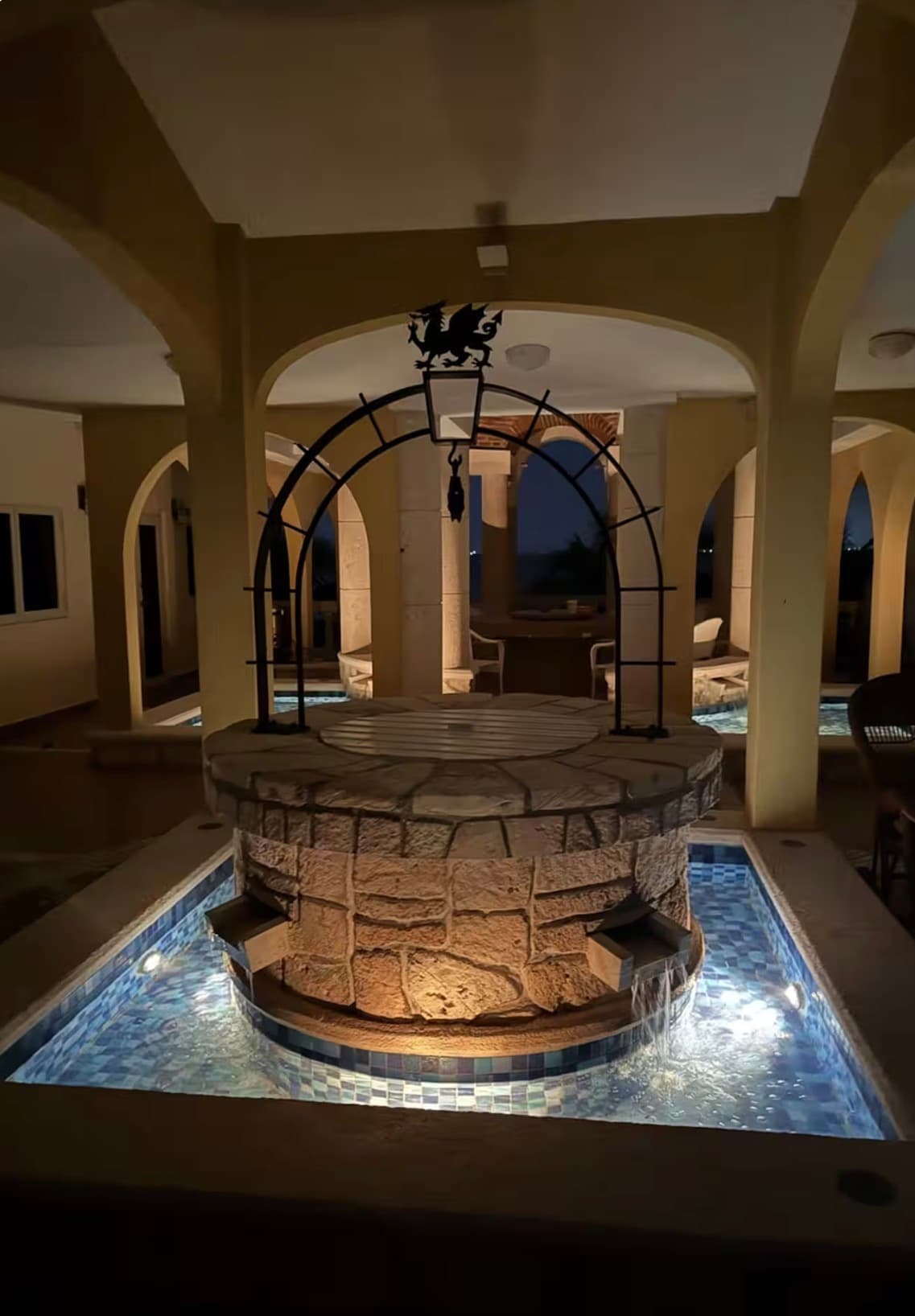
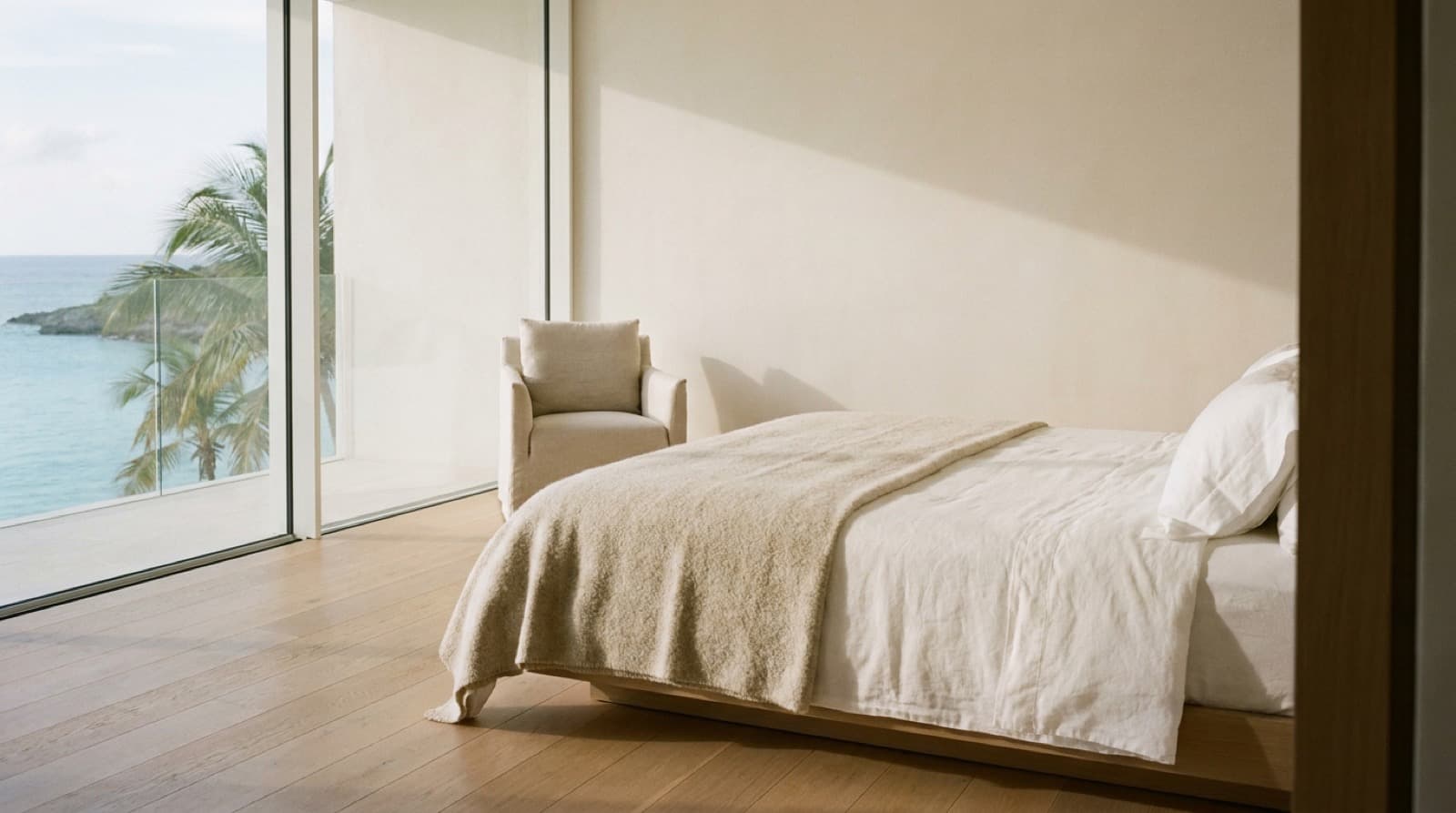
We run three residences with the same physicians, screening, and protocol at each: Casa Selva, our jungle residence and the base for standard pricing; The Hacienda, our downtown residence; and the Oceanfront Residence, a private beachfront estate for a very small number of guests, which is also pet-friendly for small and medium dogs. All three are within about ten minutes of Cozumel's two hospitals, both of which have full emergency departments, imaging, and intensive care. Compare the residences.
We treat opioid and fentanyl dependence, alcohol, stimulants, kratom, Suboxone and methadone transition, PTSD and complex trauma, depression, anxiety, SSRI and benzodiazepine discontinuation, and Parkinson's disease, each with its own program length and protocol. Browse by condition: opioids, alcohol, PTSD, C-PTSD & TBI, depression & anxiety, methadone & Suboxone, Parkinson's.
Getting Here
Getting to Cozumel from the US and Canada
Cozumel International Airport (CZM) has nonstop service from Houston, Dallas, Miami, Charlotte, and Atlanta, with seasonal routes from Chicago and Minneapolis, on American, United, Southwest, Frontier, and Sun Country. Flight times run from about two hours (Houston, Miami) to three and a half (Charlotte). If your city has no direct flight, fly to Cancun (CUN), take the ADO bus or a taxi to Playa del Carmen, and the Ultramar or Winjet ferry to Cozumel: the ferry runs every one to two hours from 6 AM to 11 PM and the crossing takes 45 minutes. We pick you up at either the airport or the ferry terminal.
US, Canadian, EU, and UK citizens need only a valid passport; Mexico does not require a visa for stays under 180 days. If you do not have a passport or yours has expired, our same-day passport help provides a signed letter of treatment that US passport agencies accept as proof of urgent travel. Full packing, climate, and arrival details are in getting to Cozumel. Canadians should also read ibogaine treatment for Canadians.
How We Measure Results
Measured Results, Not Marketing Percentages
We do not publish a success-rate percentage, because we do not yet have a dataset that would make one honest. What we do is measure: every reservation ships a pre-arrival wellness ring, validated symptom scales are repeated from intake through the months after your stay, and aggregate outcomes will be published with guests' consent when the data supports it. See the outcomes page for exactly how results are measured and when they publish.
For Parkinson's disease, our GDNF neuroregeneration protocol is followed on validated motor scales from baseline through Day 90, with tremor, rigidity, and gait assessed on the same instrument each time.
Explore condition-specific treatment guides: opioid addiction, fentanyl detoxification, depression, PTSD & TBI, methadone/Suboxone weaning, and Parkinson's disease. Our rapid detox program interrupts opioid withdrawal within the treatment window for most medically screened patients. Learn how to choose the best ibogaine clinic and tour our treatment facility in Cozumel. Compare ibogaine to alternatives: vs methadone, vs Suboxone, vs kratom, vs naltrexone. Researching the evidence? Start with the research hub, the evidence base summary, and the clinical trials tracker. Curious what the session itself is like? Read what the experience is actually like and why we pair ibogaine with 5-MeO-DMT.
Conditions We Treat
Specialized Ibogaine Protocols for Every Condition
Ibogaine Treatment for Patients by State
MindScape Retreat treats patients from every US state. Direct flights from most major cities. Browse all state pages.
Published Evidence
What the Published Research Actually Shows
No randomized controlled trial of ibogaine has been completed for any condition. What exists is a handful of small observational studies, most of them run at clinics in countries where the treatment is legal, plus a forensic case series that defines the risk. Both halves are worth reading before anyone gets on a plane.
Opioid dependence: Brown and Alper followed 30 people treated at a clinic in Mexico. Subjective Opioid Withdrawal Scale scores fell from 31.0 before treatment to 14.0 roughly three days after (p < 0.001), and at one month 15 of the 30 reported no opioid use in the previous 30 days. Improvement in drug use peaked at one month and was still measurable, though smaller, from three to twelve months. American Journal of Drug and Alcohol Abuse, 2018.
Durability: Noller, Frampton and Yazar-Klosinski followed 14 people for twelve months after a single legal ibogaine treatment in New Zealand. Drug-use and depression scores improved significantly among the eight who completed every interview. One participant in that study died during treatment. That is the reason screening here is a gate rather than a formality. American Journal of Drug and Alcohol Abuse, 2018.
Traumatic brain injury and PTSD: the largest recent study came out of Stanford. Thirty male Special Operations veterans with predominantly mild TBI received magnesium-ibogaine at a clinic in Mexico. Functioning, PTSD, depression and anxiety scores all improved substantially at one month, with no unexpected or serious adverse events reported. The authors state directly that controlled trials are still needed to validate these open-label findings, and they are right. Cherian and colleagues, Nature Medicine, 2024.
The risk, documented just as carefully: Alper, Stajic and Gill reviewed every known ibogaine-associated death outside West Central Africa from 1990 through 2008, nineteen in total. In 12 of the 14 cases with adequate postmortem data, pre-existing conditions that were mainly cardiovascular, and/or other drugs present, explained or contributed to the death. Other risk factors were seizures during alcohol or benzodiazepine withdrawal and the uninformed use of unmeasured plant preparations. Journal of Forensic Sciences, 2012.
The mechanism behind those deaths is understood. Ibogaine blocks the hERG potassium channel, which prolongs the QT interval and can trigger arrhythmia in a susceptible heart. Koenig and Hilber, Molecules, 2015. This is precisely the risk a 12-lead EKG, an electrolyte panel and a medication review are designed to find before treatment rather than during it.
Read together: the signal in acute opioid withdrawal is consistent enough to take seriously, the long-term durability data is thin and comes from very small samples, and the cardiac risk is real but largely screenable. That is the honest picture, and it is the basis on which we accept or decline a patient.
Primary References
Our protocols align with the primary scientific literature, including the MAPS Ibogaine Investigator's Brochure (July 2026), NIDA's psychedelic & dissociative drugs research, and registered trials on ClinicalTrials.gov, Brown & Alper 2018, opioid detoxification outcomes, Noller et al. 2018, twelve-month follow-up, Cherian et al. 2024, Nature Medicine, Alper et al. 2012, fatality case series, Koenig & Hilber 2015, ibogaine and the heart. Ibogaine remains investigational; we pair published evidence with measured, real-world outcome tracking.
Frequently Asked Questions
Common Questions About Ibogaine Treatment in Mexico
Start a Confidential Conversation
100% Confidential · No Obligation · Response Within 24 Hours
Get our Medical Credentials & Patient Safety Packet
15 pages: our physicians and licenses, cardiac safety standards, emergency protocols, travel guidance, and answers to the questions families ask most.
No spam, ever. Or download it directly without sharing your email.
100% Confidential · No Obligation · Available 7 Days a Week
Every MindScape treatment program includes a guided 5-MeO-DMT (Bufo) ceremony, part of the all-inclusive price, not an add-on.
Precision dosing
Your main dose is measured, not estimated
Before the main session, we give a short series of low, sub-psychoactive ibogaine TA boosters. Each one is a measurement. Ibogaine and its long-lived metabolite noribogaine both affect the heart's hERG potassium channel, and that effect is dose-dependent, so instead of predicting how you will respond we observe it directly at doses far below a full session. Your main dose is then chosen from your own cardiac response and the margin you have left.
No ibogaine given. 12-lead ECG, electrolytes and liver panel establish the starting point. A baseline outside safe limits stops the programme here.
These are the measurements the protocol is built around. The trace above is a schematic used to explain the method; it is not a recording of a patient, and the values shown are illustrative rather than results.
How the booster protocol works →This page is educational and is not medical advice. Ibogaine is an investigational substance that is not approved as a medicine by the FDA, Health Canada, the EMA, or COFEPRIS. Treatment outcomes vary and no outcome is guaranteed. Eligibility is determined by a physician after medical screening. If you are in crisis, contact local emergency services. Looking for the closest legal option from your state? Find ibogaine treatment near you.
Evidence & Research
Explore the clinical evidence behind ibogaine therapy
150+ peer-reviewed studies, active clinical trials, and emerging evidence, curated by our medical team.
Every active ibogaine trial tracked: Stanford MISTIC, DemeRx FDA pathway, UTHealth $50M IMPACT, and more.
Zero serious complications recorded in 1,000+ treatments. Comprehensive cardiac screening and continuous monitoring protocols.
Clinical outcomes from 1,000+ patients: opioid addiction, PTSD, depression, and neurological conditions.