If you have heard the word "bufo" mentioned in a podcast, a documentary, or a conversation about psychedelic therapy and wondered what it actually refers to, you are not alone. "What is bufo?" has become one of the most searched questions in the psychedelic medicine space — and the answers people find are often incomplete, sensationalized, or simply wrong.
This article gives you a clear, medically grounded answer. For a deeper dive into the pharmacology and clinical context, see our complete explainer on what the bufo drug is and how 5-MeO-DMT works.
Bufo, Defined
"Bufo" is shorthand for Bufo alvarius, the Sonoran Desert toad (now taxonomically reclassified as Incilius alvarius). This large amphibian, native to the Sonoran Desert spanning northern Mexico and the southwestern United States, produces a defensive secretion from its parotoid glands that contains an extraordinarily potent psychoactive compound: 5-MeO-DMT (5-methoxy-N,N-dimethyltryptamine).
When people say they "did bufo," "sat with the toad," or received "toad medicine," they are almost always describing the inhalation of vaporized Bufo alvarius secretion — or, increasingly in clinical settings, pure synthetic 5-MeO-DMT.
So the short answer to "what is bufo?" is this: bufo is a naturally occurring source of 5-MeO-DMT, one of the most powerful psychoactive substances known, and it is being studied and used as a tool for treating depression, anxiety, trauma, and addiction.
Bufo vs. Buffo vs. "The Toad" — Clearing Up the Names
Search data shows people looking for "bufo," "buffo," "bufo drugs," and "bufo what is it" — all pointing to the same substance. Common names include:
- Bufo or bufo alvarius — the toad itself, used as shorthand for the secretion
- Toad medicine or el sapo — ceremonial and traditional names
- 5-MeO-DMT — the active molecule, used in clinical and research contexts
- "The God molecule" — a popular nickname reflecting the intensity of the experience
Note that "buffo" with two f's is simply a common misspelling. There is no separate substance by that name.
What Does Bufo Do? The Effects Explained
5-MeO-DMT is a tryptamine that acts primarily on serotonin receptors, with particularly strong affinity for the 5-HT1A and 5-HT2A receptor subtypes. When vaporized and inhaled, its effects begin within seconds and typically last 15 to 45 minutes — dramatically shorter than psilocybin (4–6 hours) or ibogaine (24+ hours).
Despite the brief duration, the experience is widely described as the most intense of any psychedelic. Typical bufo drug effects include:
- Ego dissolution — a temporary loss of the ordinary sense of self, often described as merging with everything
- Non-dual awareness — an experience of unity that many participants describe as profoundly spiritual
- Emotional release — waves of grief, joy, or long-suppressed feeling surfacing and moving through the body
- Physical effects — elevated heart rate and blood pressure, changes in body temperature, and occasionally purging
Unlike classic psychedelics, 5-MeO-DMT produces few visual hallucinations. Users often describe it as an experience of pure light, energy, or void rather than imagery. This is one reason researchers consider it a distinct category of psychedelic medicine.
Why Are People Using Bufo Therapeutically?
Interest in bufo is not primarily recreational — the intensity of the experience makes it poorly suited to casual use. The growing attention comes from its therapeutic potential.
Early clinical research and observational studies suggest a single administration of 5-MeO-DMT may produce rapid, sustained improvements in depression, anxiety, and post-traumatic stress symptoms. In studies of special operations veterans who received combined ibogaine and 5-MeO-DMT treatment, participants reported large reductions in PTSD symptoms, depression, and suicidal ideation that persisted at follow-up.
Mechanistically, researchers believe 5-MeO-DMT promotes neuroplasticity — the brain's capacity to form new connections — while the ego-dissolving peak experience allows people to step outside entrenched patterns of rumination, fear, and self-judgment. Many participants describe a "reset" quality: the mental loops that drove their depression or addiction simply feel less compelling afterward.
At MindScape Retreat, 5-MeO-DMT therapy with bufo alvarius is offered as a physician-supervised treatment, most often as a complement to ibogaine. The two medicines work in sequence: ibogaine performs deep neurochemical repair and interrupts addiction at the receptor level, while 5-MeO-DMT provides an integrative peak experience that many patients describe as the emotional and spiritual culmination of their treatment. You can read more about why this pairing is so effective in our article on the synergistic power of combined ibogaine and 5-MeO-DMT treatment.
Is Bufo Safe? What You Need to Know
This is where honest information matters most. 5-MeO-DMT is physiologically powerful, and safety depends almost entirely on context.
The real risks
- Cardiovascular strain. The experience transiently raises heart rate and blood pressure. People with cardiac conditions require medical screening.
- Dangerous drug interactions. Combining 5-MeO-DMT with MAOIs (including ayahuasca) or certain antidepressants can cause life-threatening serotonin toxicity. This is the single most important safety rule.
- Psychological overwhelm. Without preparation and skilled facilitation, the intensity of ego dissolution can be traumatic rather than healing.
- Unregulated settings. Underground ceremonies vary enormously in quality. Reports of injuries and deaths in unsupervised settings nearly always involve poor screening, drug combinations, or untrained facilitators.
What responsible use looks like
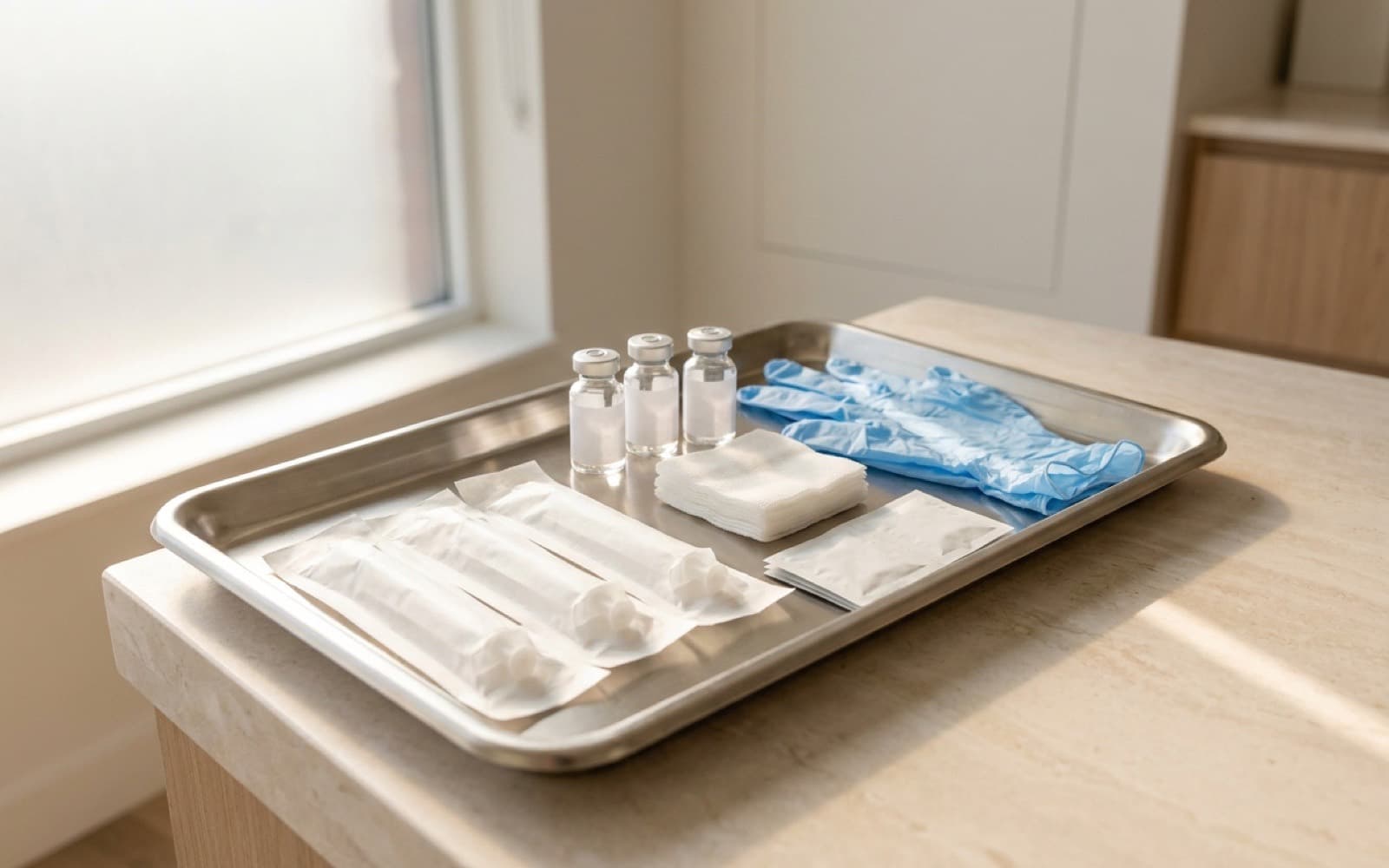
In a clinical setting, safety protocols include comprehensive medical screening (cardiac evaluation, medication review, psychiatric history), physician supervision during administration, emergency equipment on-site, careful dosing, and structured integration support afterward. This is the standard we hold at our physician-supervised ibogaine treatment clinic in Cozumel, where every 5-MeO-DMT session takes place under direct medical oversight.
A note on the toad itself
Growing demand for toad-derived secretion has put pressure on wild Bufo alvarius populations. Over-harvesting and habitat disruption are real conservation concerns. For this reason, many clinicians and even traditional practitioners now advocate for synthetic 5-MeO-DMT, which is chemically identical to the natural molecule, precisely dosable, and removes the animal from the equation entirely.
Is Bufo Legal?
In the United States, 5-MeO-DMT is a Schedule I controlled substance, making both the synthetic compound and the toad secretion illegal to possess or administer. The toad itself is protected in some states, including California and New Mexico.
In Mexico, 5-MeO-DMT is not scheduled, which allows licensed medical facilities to administer it legally under clinical supervision. This is why the most reputable programs offering bufo and ibogaine treatment operate in Mexico — combining legal access with genuine medical infrastructure.
Colorado's Natural Medicine Health Act and ongoing FDA-track research into 5-MeO-DMT formulations (including clinical trials for treatment-resistant depression) suggest the legal landscape may shift in the coming years. For now, legal access requires traveling to a jurisdiction where medical administration is permitted.
What a Bufo Session Actually Looks Like
People researching "what is bufo" often want to know what the experience involves practically. In a clinical program, a 5-MeO-DMT session typically follows this arc:
- Screening and preparation. Medical evaluation, medication tapering if needed, and preparation sessions to set intentions and reduce anxiety.
- The session. The patient reclines in a comfortable, monitored setting. The vaporized medicine is inhaled in one or two breaths. Effects begin within 30 seconds.
- The peak. For 5 to 20 minutes, the patient is in the deep experience. Facilitators and medical staff monitor continuously but intervene minimally.
- Return and rest. Ordinary awareness returns gradually over 30 to 60 minutes. Most patients describe feeling calm, clear, and emotionally open.
- Integration. In the days that follow, structured integration sessions help translate the experience into lasting behavioral and emotional change.
The brevity of the experience is one of its clinical advantages: unlike an eight-hour psilocybin session or a 24-hour ibogaine journey, a 5-MeO-DMT session fits within a single morning, with the rest of the day devoted to rest and integration.
Frequently Asked Questions About Bufo
Is bufo the same as DMT? No. 5-MeO-DMT and N,N-DMT (the DMT in ayahuasca) are chemically related but pharmacologically distinct. 5-MeO-DMT is roughly four to six times more potent, produces less visual imagery, and generates a more complete ego-dissolution experience.
Do you hallucinate on bufo? Most people report little to no visual content. The experience is more accurately described as a dissolution of ordinary consciousness into light, energy, or unity — which is why many describe it in spiritual rather than perceptual terms.
How long does bufo last? The acute experience lasts 15 to 45 minutes, with full return to baseline within about an hour. Afterglow effects — improved mood, reduced anxiety, emotional openness — often persist for days or weeks.
Can bufo help with addiction or depression? Early research is promising, particularly for depression, anxiety, and PTSD, and particularly when combined with ibogaine for substance use disorders. It is not a magic bullet: outcomes depend heavily on screening, facilitation quality, and integration support.
Is licking a toad the same thing? No — and it is dangerous. The raw secretion contains bufotoxins that are cardiotoxic when ingested orally. The secretion is only psychoactive (and only relatively safe) when dried and vaporized. Never ingest toad secretion orally.
The Bottom Line
So, what is bufo? It is the common name for the Sonoran Desert toad and its 5-MeO-DMT-rich secretion — one of the most powerful and fastest-acting psychedelic medicines known. In unregulated settings, it carries real risks. In a screened, physician-supervised clinical context, it is emerging as a remarkable tool for treating depression, trauma, and addiction, especially in combination with ibogaine.
If you are considering this medicine, start with education. Read our full breakdown of the bufo drug and 5-MeO-DMT explained, and if you want to discuss whether a supervised program is right for you, contact MindScape Retreat for a confidential consultation with our medical team.
Begin Your Journey
MindScape Retreat offers medically supervised ibogaine treatment in Cozumel, Mexico. Speak with our clinical team to learn if you are a candidate.
A guided one-day 5-MeO-DMT (Bufo) session starts at $1,450, and a guided ceremony is already included in every ibogaine program: see the one-day program or start free medical prescreening.