People who have taken psilocybin, LSD, or ayahuasca often assume an ibogaine trip will feel like a longer version of what they already know. It does not. Ibogaine produces a waking-dream state that lasts the better part of a day, keeps you in bed, and requires cardiac monitoring the whole time. The word "trip" carries recreational baggage that sets the wrong expectations for all three of those facts.
This article walks through seven concrete differences between an ibogaine trip and a classic psychedelic session: how long it lasts, where the imagery comes from, what your body does, why the setting is a clinic rather than a living room, and what the weeks afterward look like. If you want the phase-by-phase timeline of a full program, our ibogaine trip guide covers the booster days, the flood dose, and the recovery window in detail. This piece is about the shape of the experience itself.
Why an ibogaine trip is not a psychedelic trip
The first difference is time. A psilocybin session resolves in an afternoon and an LSD session in a long day. The acute ibogaine experience runs roughly 18 to 24 hours from administration, with the most intense visionary phase typically occupying the first four to eight hours and a long processing and rest phase after that.
Normal conversation returns gradually somewhere past the 12-hour mark. Most people are walking steadily again by the second day and feel progressively clearer from day three.
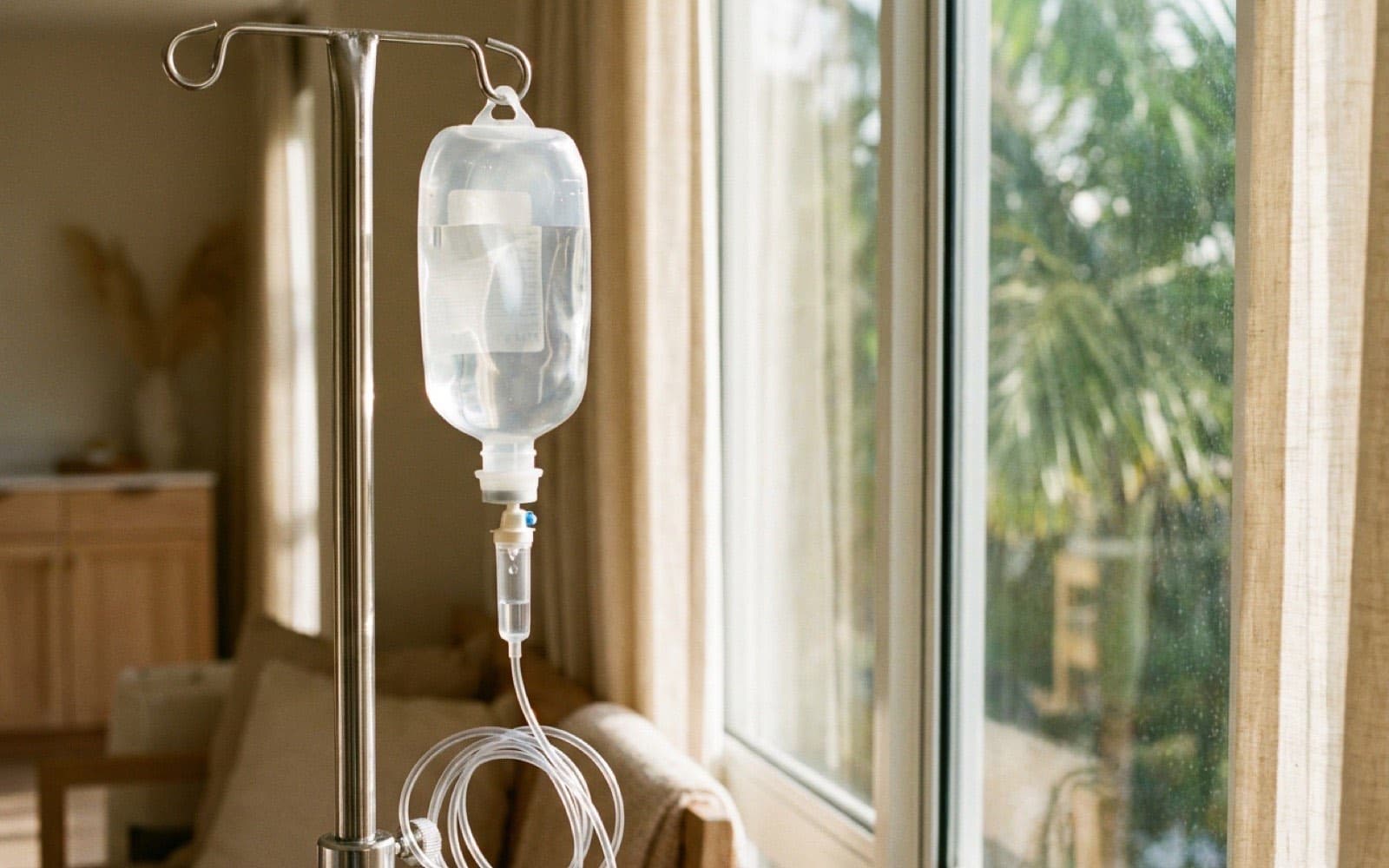
That duration changes the whole logistics of the experience. You cannot schedule it around a weekend. You fast for six to eight hours beforehand, you do not eat during the acute phase, and IV fluids keep you hydrated until sips of water and light broth come back in around the 18 to 24 hour mark. An ibogaine trip is a medical event measured in days, not an evening measured in hours. Everything else on this list follows from that.
The second difference is pharmacology, and it is the reason the other five exist. Classic psychedelics act mainly on serotonin receptors and are physiologically gentle for most healthy people. Ibogaine touches several receptor systems at once, is converted into a long-acting metabolite, and affects cardiac conduction. Our explanation of how ibogaine works covers the receptor-level detail; the practical consequence is that the body, not the mind, sets the rules for how this experience is run.
What you actually experience during an ibogaine trip
The visions come from memory, not from the senses
A psychedelic trip is usually an eyes-open experience. Colors intensify, surfaces breathe, music takes on texture.
An ibogaine trip is an eyes-closed experience. Patients describe it as watching a film of their own life, often from childhood forward, with unusual clarity about cause and effect in their choices and relationships. The content is autobiographical rather than sensory.
Two things surprise people here. First, the visionary phase is not universal. A majority of patients report vivid dreamlike states, but a meaningful share experience mostly physical and emotional processing with few or no visuals, and the absence of visions does not mean the medicine is not working.
Second, geometric imagery and lights can happen, but they are usually the opening act rather than the main feature. The life review is what people remember.
Your body stays in bed
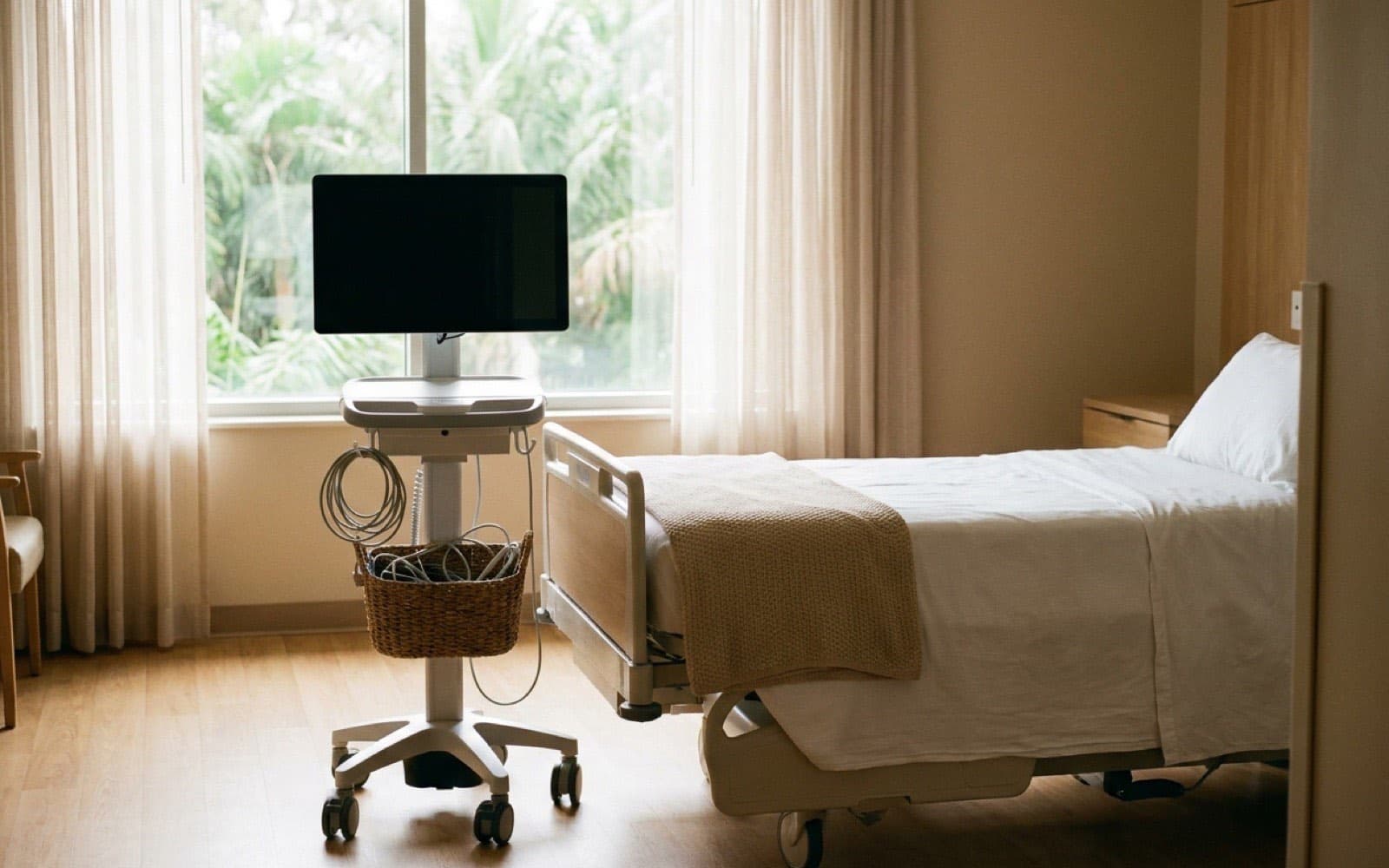
On a classic psychedelic you might walk, dance, or sit outdoors. On ibogaine you lie down and stay there. Ataxia, the loss of motor coordination, is a standard effect, along with buzzing or vibrating sensations, shifts in body temperature, and nausea. Anti-nausea medication is available throughout, and a nurse or physician is at the bedside, but the posture of the experience is horizontal.
This matters for expectations. There is no "going for a walk to shake it off." If you need something, you communicate by hand squeeze during the deepest phase. The physical effects are temporary and medically managed, but anyone picturing a walk in the jungle is picturing the wrong substance.
There is no euphoric arc
Most psychedelics have a recognizable curve: come-up, a peak that often includes euphoria or awe, and a gentle comedown. Ibogaine rarely offers that arc. Patients frequently describe it as work.
Emotional purging through crying, laughing, or waves of feeling is common and is treated as part of the therapeutic mechanism rather than as a problem to suppress. The phrase we hear most often afterward is some version of "years of therapy in one night," and the emphasis is on the therapy, not the night.
This also reframes the idea of a "bad trip." Difficult material surfacing is expected, not a sign that something went wrong, and the clinical team is present to support rather than to interrupt. Short-acting sedatives are kept available for acute anxiety, but they are rarely needed. The goal is to let the process complete, not to abort it.
Why the setting is a monitored clinic, not a living room
Screening comes before the experience, not after
A psychedelic trip-sitter checks your mood and your intentions. An ibogaine program checks your heart. Before admission you complete a medical history, a 12-lead EKG within 30 days of treatment, and a blood panel covering electrolytes, liver function, blood count, and thyroid. Medications that interact with ibogaine are tapered under supervision, and contraindicated substances are discontinued on a schedule set by the medical team.
No reputable program lets you skip screening because you have "done psychedelics before." Prior experience with psilocybin or ayahuasca tells a physician nothing about your QT interval, your potassium, or your liver enzymes, and those are the numbers that decide whether an ibogaine trip is safe for you on a given day.
Monitoring continues during and after
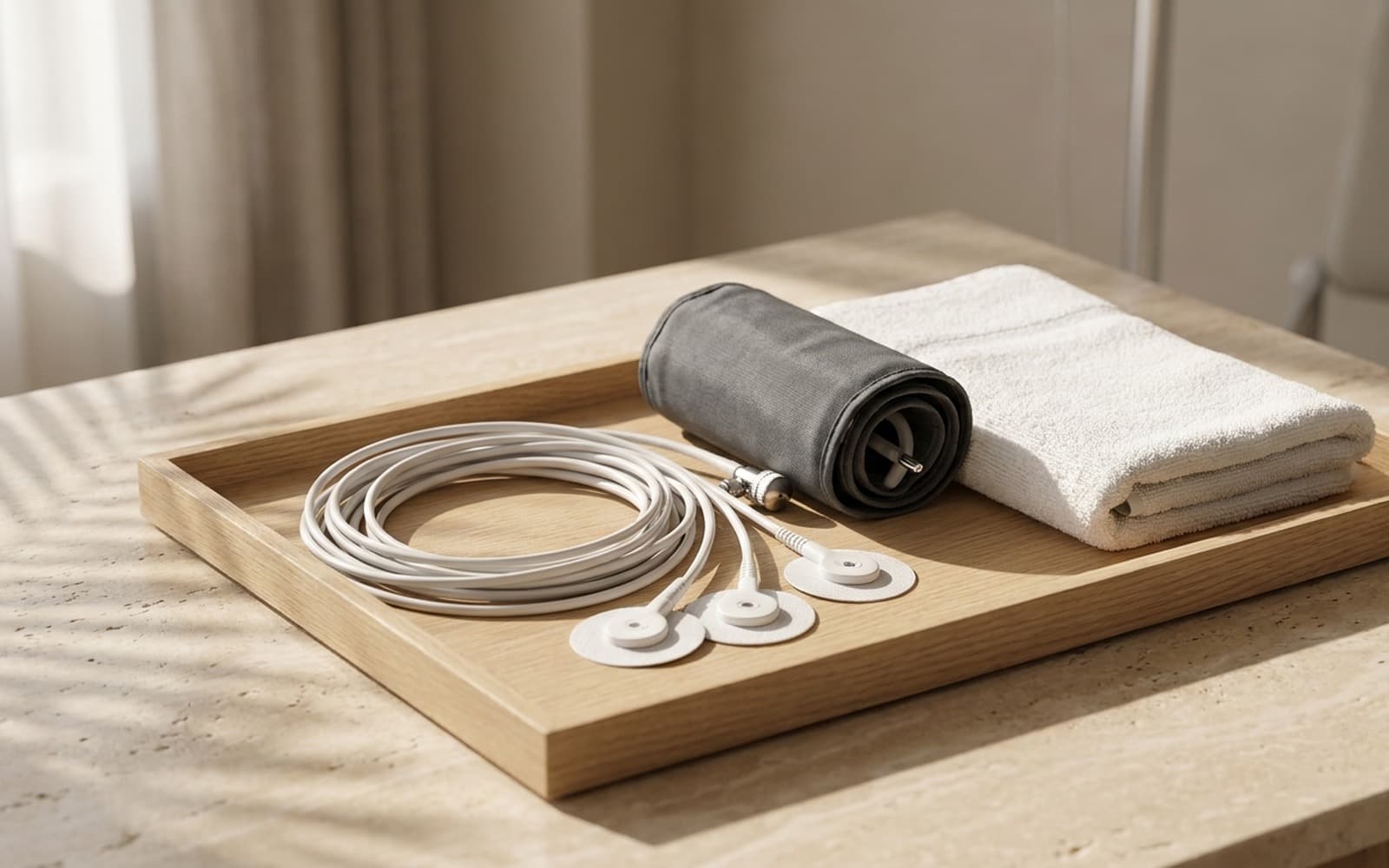
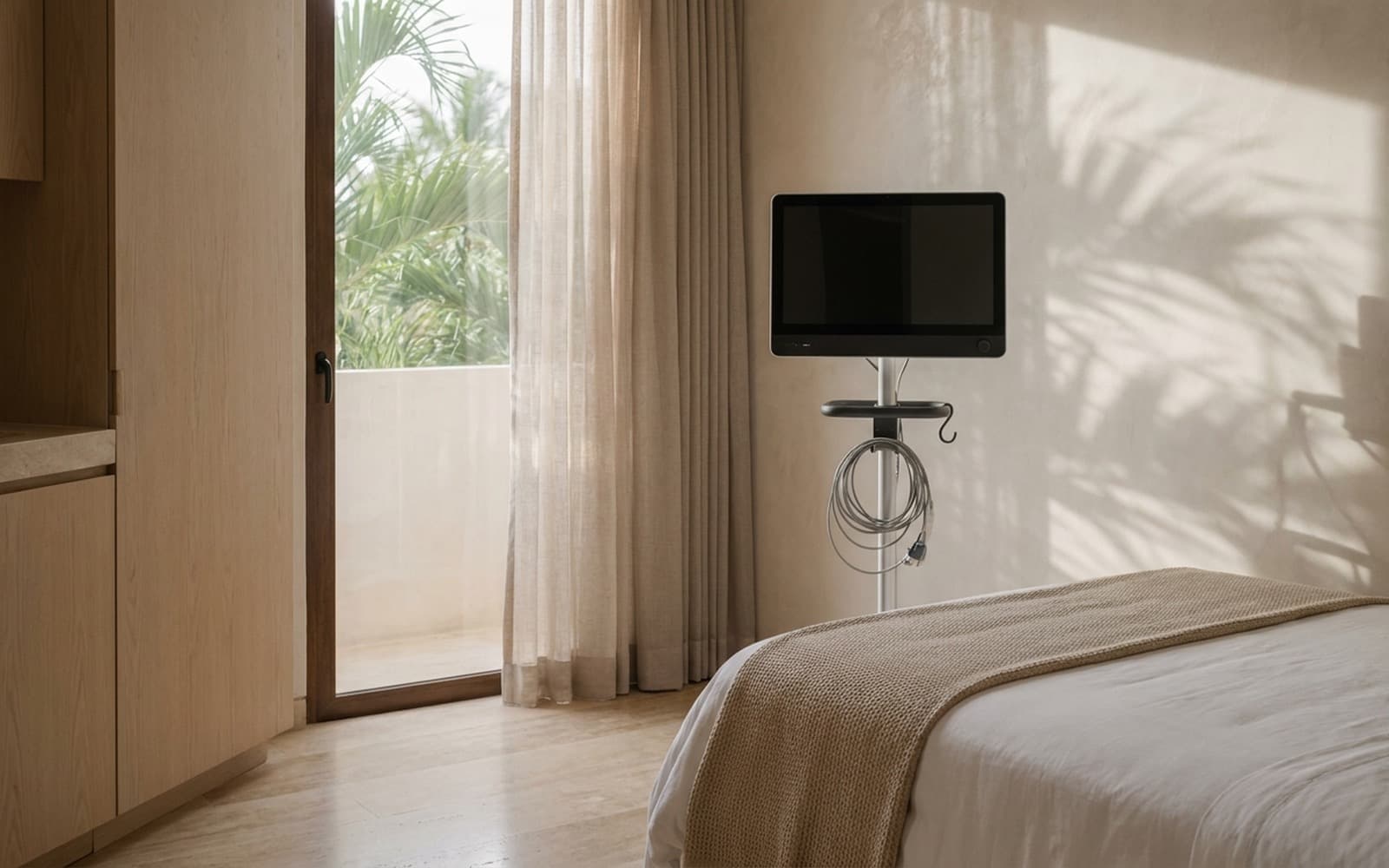
During the experience you are on continuous cardiac telemetry with pulse oximetry and blood pressure checks, and a physician or nurse is present throughout. Telemetry continues past the acute window because the active metabolite persists well after the visions fade. This is the setting difference in one sentence: a psychedelic session is run by a facilitator with a playlist, and an ibogaine session is run by a medical team with a monitor. Our ibogaine treatment clinic page lists the equipment, staffing, and hospital transfer arrangements that sit behind that sentence.
What happens after the ibogaine trip ends
The seventh difference is the one people underestimate most. After a psychedelic session, most of the effect is concentrated in the session itself, with integration as optional follow-up. After an ibogaine trip, the weeks that follow are where much of the therapeutic value lives.
The afterglow is the first part. In the days and weeks after treatment, most patients report heightened clarity, emotional openness, reduced cravings, and improved mood. This reflects a period of increased neuroplasticity, a window in which new patterns form more easily than usual. It is also why structured aftercare picks up as soon as the acute phase ends rather than waiting for a one-month check-in.
The sleepless nights are the second part. Sleep disruption for roughly two to five nights after treatment is common, because ibogaine stimulates the central nervous system. It resolves on its own, and melatonin, magnesium, and sleep hygiene guidance are provided, but it should be planned for. Arrange at least ten days away from work, and do not expect to fly home the morning after.
The ibogaine trip is the opening of a window, not the whole treatment. A 90-day aftercare program with physician and psychologist video sessions, peer community, and crisis support exists precisely because what you do in that window determines how much of the experience you keep.
How to prepare for an ibogaine trip
Preparation for a psychedelic session is mostly mental: intention, setting, a trusted sitter. Preparation for an ibogaine trip has a medical layer and an emotional layer, and both matter.
On the medical side, complete the screening questionnaire honestly, get the EKG and bloodwork done inside the required window, and follow the medication taper exactly as agreed with your prescriber and the clinic. On the emotional side, set a clear intention, start a journaling practice, reduce screens, alcohol, and caffeine in the final week, and write a letter to yourself explaining why you are doing this. Read it when you come home. Tell one trusted person what you are doing, because you will need support afterward, and set up aftercare at home before you leave rather than after you return.
If you are deciding whether an ibogaine trip is right for you, start with a free eligibility screening at MindScape Retreat, where a physician reviews your medical history, medications, and goals before anything is scheduled. The experience is demanding, and the right preparation is what turns a long day in bed into a turning point.
This article is educational and is not medical advice. Ibogaine is not a cure for any condition, and outcomes vary from person to person. Discuss any treatment decision with a qualified physician. If you are in crisis in the United States, call or text 988.
Begin Your Journey
MindScape Retreat offers medically supervised ibogaine treatment in Cozumel, Mexico. Speak with our clinical team to learn if you are a candidate.