Searches for bofu drugs almost always point at the same subject: 5-MeO-DMT, the compound carried in the parotoid secretion of the Sonoran Desert toad, Incilius alvarius. The spelling drifts because most people hear the word spoken long before they ever see it written, so "bofu," "bufo," and "bufo drug" all arrive at the same place. The more useful question sits underneath the spelling, and it is usually some version of where would I do this, and who would be in the room.
That second question matters more than most people expect. The molecule is identical whether it is offered in a ceremonial circle or a clinical suite. What differs is the screening that happens beforehand, the monitoring that happens during, and whether anyone present has a plan for the moment something goes wrong.
What people mean when they search bofu drugs
The search term is a phonetic guess at a real thing. Four facts cover most of what the phrase is reaching for.
The source is an animal secretion, not a plant. The active compound is 5-MeO-DMT, a tryptamine chemically related to DMT but distinct from it in effect and duration. The experience is short — minutes rather than the hours associated with ayahuasca or psilocybin. And the intensity at the peak is the reason the short duration matters so little to anyone describing it afterward.
Spanish-language searches land in the same territory. Que es el bufo and bufo ritual are asked by people who have heard about ceremonies in Mexico and want a plain explanation before deciding anything. If you want the full background on the compound, its history, and how it differs from other tryptamines, our complete guide to bofu drugs covers the terminology and the pharmacology in one place.
What that guide cannot settle for you is the setting question. That one depends on your medical history and your tolerance for unknowns.
What a bufo ritual usually looks like
A ceremonial session is typically led by a facilitator rather than a clinician. The framing is spiritual. Sessions may be held outdoors, in a group, or one-to-one, often with song, prayer, smoke, or other ritual elements that give the experience structure and meaning.
Intake in this model happens through conversation. A facilitator may ask thoughtful questions about your intentions, your history, and your state of mind. Some ask a great deal. Some ask almost nothing, and a few ask for a deposit before they ask anything at all.
There is no licensing body for bufo facilitators. No registry exists to check credentials against, no required training hours, and no standard definition of what "experienced" means. The range of competence in this space is genuinely enormous, and from the outside — a website, a referral, a conversation on a messaging app — the excellent and the reckless can be difficult to tell apart.
That is not an argument against ceremony. Ritual context has real value for many people, and the meaning a setting provides is part of why these experiences land the way they do. It is an argument for knowing what you are and are not being offered.
What medical supervision adds
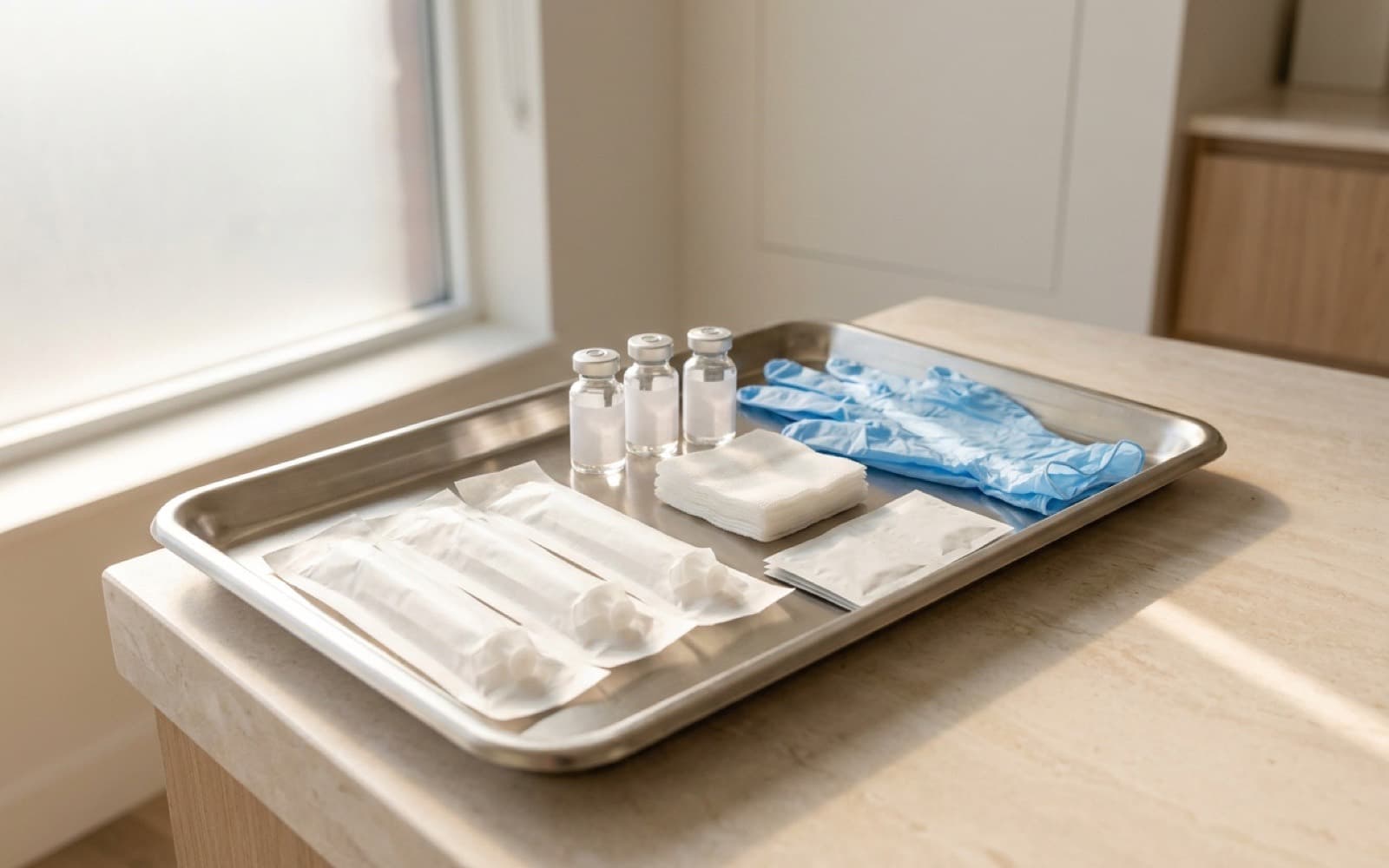
A physician-supervised model treats the session as a medical event with a psychological purpose, which means the work starts weeks before anyone is in a room together.
Pre-treatment screening is the core of it. A thorough intake looks at cardiovascular history, blood pressure, and anything suggesting an arrhythmia. It reviews your full medication list — prescriptions, over-the-counter products, and supplements — with particular attention to serotonergic agents, because combining them with a potent tryptamine raises the risk of serotonin toxicity. SSRIs, SNRIs, MAOIs, lithium, tramadol, and certain migraine medications all belong on the table for discussion with a prescribing physician well in advance.
Psychiatric history gets the same scrutiny. A personal or family history of psychosis or bipolar disorder changes the calculation, as does recent instability, and any honest screening process will sometimes end with a decision not to proceed.
During a session, supervision means trained staff who are watching the person rather than the ceremony: airway, breathing, blood pressure, and physical safety while motor control is absent. It means oxygen on hand, a written emergency protocol, and a named hospital with a known travel time. At MindScape Retreat, that structure sits alongside the experiential side of the work rather than replacing it — our 5-MeO-DMT therapy program pairs medical oversight with preparation and integration support.
No setting removes risk. A supervised one is designed so that the predictable problems are caught before the session and the unpredictable ones are not faced by someone improvising.
Which risks does the setting actually change?
It helps to separate what the setting controls from what it does not.
Medication interactions are entirely a screening problem. Nothing a facilitator does during a session can undo a serotonergic interaction that was never identified. This is the single clearest advantage of a clinical intake, and it is invisible to anyone who has never been asked for their medication list.
Cardiovascular strain is partly screening and partly monitoring. A sharp sympathetic surge is part of the experience, which matters more if you have an undiagnosed cardiac condition than if you do not. Screening finds some of that; monitoring catches what screening missed.
Physical safety during the session is pure staffing. Someone has to manage a body that cannot manage itself for several minutes. In a well-run session of any kind, that person has done it before and is not also leading the ceremony.
The aftermath belongs to neither screening nor monitoring. The hours and days afterward are when people make sense of what happened, and the quality of that period depends on whether anyone planned for it. Integration support is the part most often promised and least often specified.
How can you tell which setting you are being offered?
The useful signals are observable before you pay anything.
Ask what happens before the session. A clinical process asks for medical records, a medication list, and often a conversation with a physician — and it does this before taking a deposit rather than after. If screening appears only after money has changed hands, the screening is paperwork rather than a gate.
Ask who will be in the room, by role. "A facilitator and a medic" is an answer. "Our team" is not. Ask whether a physician reviews your file, and if so, which physician.
Ask what the emergency plan is in concrete terms. Which hospital, how far, by what vehicle, and who makes the call. Anyone who has genuinely prepared for this answers quickly and specifically.
Ask what happens if they decline you. A program that has never turned anyone away is not screening anyone.
Questions worth asking before you book
Take this list to any provider, ceremonial or clinical, and compare the answers rather than the websites.
- What medical information do you require from me, and at what point in the process?
- Who reviews my medication list, and what credentials do they hold?
- Which medications or conditions would cause you to decline a participant?
- Who is physically present during a session, and what is each person trained to do?
- What monitoring equipment is on site, and what emergency medication is available?
- Which hospital would you use, and how long does it take to get there?
- What does preparation involve in the weeks beforehand?
- What does integration support actually consist of after I leave?
- How many people are in a session, and can I request one-to-one?
- What do you consider a poor outcome, and how often has it happened?
Vague answers to specific questions are themselves an answer. So is irritation at being asked.
Nothing here is a verdict on ceremony versus clinic as traditions. Both exist on a wide spectrum of care, and a conscientious facilitator with a rigorous intake may screen more carefully than a careless clinic. The point is that you can find out which one you are dealing with, and the finding out is free.
If you are weighing a session and have any cardiac history, any psychiatric diagnosis, or any daily medication, start with the medication review rather than the booking. It is the step that changes outcomes most and the one most often skipped.
Our complete guide explains what bofu drugs are in detail, and our team at MindScape Retreat is available to walk through screening questions with you before you commit to anything, here or elsewhere. Reach out through MindScape Retreat if you would like that conversation with a physician-led program rather than a sales desk.
This article is educational and is not medical advice. Decisions about psychoactive substances, prescription medications, and mental health care should be made with a qualified physician who knows your history. If you are in crisis in the United States, call or text 988.
Begin Your Journey
MindScape Retreat offers medically supervised ibogaine treatment in Cozumel, Mexico. Speak with our clinical team to learn if you are a candidate.