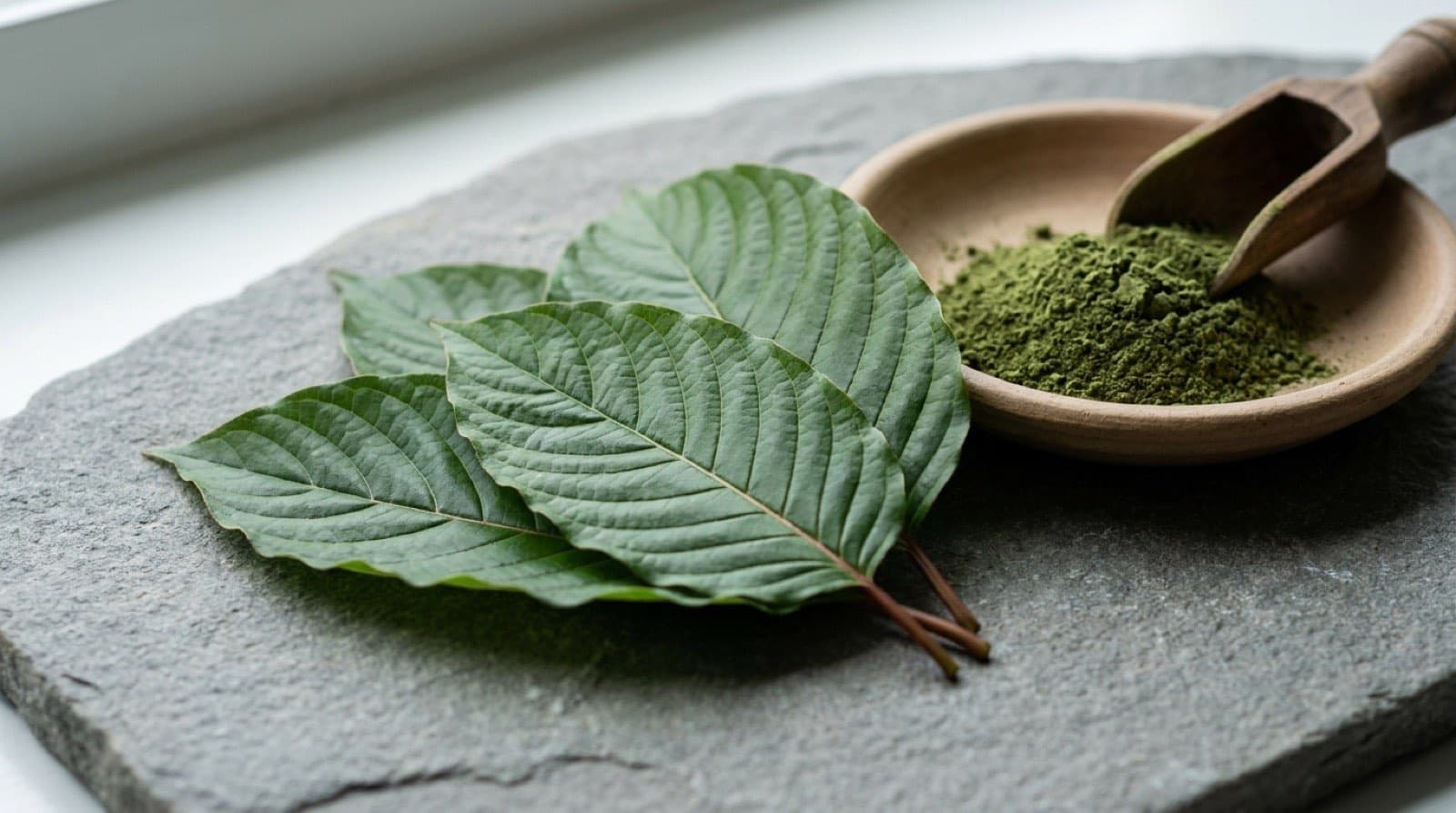
Where the 7-OH Ban Actually Stands
On 6 July 2026 the DEA published two notices of intent to place 7-hydroxymitragynine above a specified threshold into Schedule I on a temporary basis, along with three related synthetic compounds. The notices state that a temporary scheduling order may be published on or after 5 August 2026, would take effect the day it publishes, and would stay in effect for two years.
As of 9 September 2026, that order had not appeared in the Federal Register. A notice of intent is not a ban. It is also not nothing: in 2016 the DEA moved to schedule kratom’s alkaloids and withdrew the notice after public comment, so this has gone both ways before.
The three related synthetic compounds are a different story. On 26 August 2026 the DEA published a separate temporary order placing mitragynine pseudoindoxyl, MGM-15 and MGM-16 in Schedule I, effective that day. The 7-OH threshold action itself remained open, with its comment period extended to 10 September 2026.
The proposed control is written around a concentration, not around the plant. It targets material above 0.05 percent 7-OH, or more than 1 milligram of 7-OH per article, which describes concentrated tablets, shots and extracts. Whole leaf kratom is naturally very low in 7-OH and is not covered by that threshold.
This can change on any business day. Confirm the current position with the Federal Register or a licensed attorney rather than relying on any clinic’s website, including ours.
Why This One Is Different
7-OH Is Not The Kratom People Started With
Kratom leaf contains dozens of alkaloids. Mitragynine is the dominant one, and 7-hydroxymitragynine is present only in trace amounts. Concentrated 7-OH products invert that relationship entirely, delivering a far more potent mu-opioid receptor agonist directly, in a consistent measured dose, in a tablet or a shot bought at a counter.
That difference is the whole story. People who used leaf for years describe reaching a level of dependence on concentrated products in a matter of weeks. The intervals between doses get shorter. A late dose stops being uncomfortable and starts being withdrawal. The dose that worked in month one does not work in month three.
Most people we speak to did not set out to take an opioid. They were sold a supplement, on a shelf, next to the energy drinks, with no warning label that meant anything. Several arrived at kratom in the first place because they were trying to get off prescription opioids or heroin, which makes the current situation feel like a particularly cruel joke: the exit turned into a second dependency, and now the exit is being scheduled too.
None of that is a character failure. 7-OH acts on the same receptors as any other opioid, and the body responds the way bodies respond.
What Is 7-OH Dependence?
7-OH dependence is physical dependence on 7-hydroxymitragynine, a potent mu-opioid receptor agonist found in trace amounts in kratom leaf and in far higher concentrations in tablets, shots and extracts sold as kratom products. Daily use produces tolerance, physical withdrawal on cessation, and craving of the same kind seen with other opioids.
- Concentrated 7-OH products deliver a far more potent opioid agonist than the leaf they are marketed alongside
- Withdrawal is opioid-type: anxiety, insomnia, muscle pain, nausea, sweating, restless legs, and a flat, joyless period that can outlast the physical symptoms. A 2026 case report describes symptoms beginning within 6 to 8 hours of the last dose
- Many people arrived here after using kratom to escape prescription opioids, so the underlying opioid history is often longer than the 7-OH history
- Conventional care frequently does not recognise 7-OH dependence at all, which leaves people without support at exactly the point they ask for it
Read This Before Your Supply Runs Out
The Danger Is The Unplanned Stop, Not The Schedule
If concentrated 7-OH becomes federally controlled, the practical effect for a physically dependent person is not a legal problem. It is a supply problem, arriving on a date nobody chose, most likely without warning.
Please do not let that be your detox plan. Stopping a daily opioid abruptly and unsupervised is unpleasant at best and genuinely dangerous when dehydration, existing heart conditions, other substances or a solitary setting are involved. The other common outcome is worse: people in unmanaged withdrawal often return to whatever is available, and for someone with a prior opioid history, tolerance has already fallen.
This is not a theoretical caution. A 2026 case report in the medical literature describes a patient taking roughly 800 mg of concentrated 7-OH daily, escalated from ordinary kratom over about a month. Withdrawal began within 6 to 8 hours of his last dose and escalated to severe agitation, hallucinations and respiratory compromise requiring intubation. That is one published case and not a forecast for anyone else, but it is the documented end of the range, and it is worth knowing before deciding to ride it out alone.
One specific warning, because it is easy to get wrong. Do not take buprenorphine soon after a dose of 7-OH in the hope of heading withdrawal off. Buprenorphine binds the same receptor more tightly and will displace what is already there, which can bring on withdrawal rather than prevent it. That is what happened in the case above. Buprenorphine is a legitimate and often excellent treatment here; the timing of the first dose is a clinical decision and needs a clinician.
Whatever you decide to do next, decide it before the decision is made for you. Talk to your own doctor, an addiction medicine service, or our team. We would rather you got proper care somewhere else than went through this alone, and we will say so plainly if we are not the right fit for your situation.
An Honest Word About Maintenance
Methadone And Buprenorphine Are Real Medicine. So Is Being Told Your Options
The standard offer for opioid dependence is maintenance treatment with buprenorphine or methadone. These are evidence-based medications with serious data behind them, including large reductions in overdose death, and we are not going to pretend otherwise to win your business. For a great many people, maintenance is the right clinical answer, and if that is you, take it.
What we hear from patients, over and over, is something narrower and more specific: nobody told them there was anything else. Maintenance was presented as the only door, and it is frequently open-ended, and no one ever sat down and described what an interruption-based approach involves, what it costs, what it risks, or who it is unsuitable for. Some people accept indefinite maintenance willingly once they understand it. Others say they would have chosen differently had they been given the whole menu.
That is the gap we think is worth naming. Not that maintenance is bad, but that a choice you were never offered is not a choice you made. This page exists so that the option is at least visible to you.
And the caution that goes with it: never stop or change a prescribed maintenance medication on your own. If you are currently on buprenorphine or methadone, treatment here requires a medically directed transition well beforehand, measured in weeks, and methadone in particular carries additive cardiac risk with ibogaine that has to be screened for carefully. Sometimes the honest answer is that the preparation makes treatment inappropriate or badly timed. We will tell you that.
Understanding Your Options
Ways Through 7-OH Dependence
| Ibogaine | Unplanned Cessation | |
|---|---|---|
| Timing | Chosen in advance, with screening completed and a bed ready | Decided by whenever the supply stops |
| Setting | Inpatient, with physicians and nurses present continuously | Usually alone, at home, without medical cover |
| Withdrawal Management | Managed clinically throughout the acute phase | Unmanaged, and commonly the reason people return to use |
| Cardiac Risk | Screened before treatment with EKG and QTc, bloodwork and a medication review; clearance is not guaranteed | Unassessed, which matters most for the people who need it most |
| The Period After | Structured aftercare framework and integration support | The flat, joyless weeks are where most unsupported attempts end |
| Honest Limitation | Not suitable for everyone, requires travel, and is not covered by insurance | Free, immediate, and sometimes the only thing available |
Why Ibogaine For This
What The Treatment Is Intended To Address
The Withdrawal Itself
Ibogaine's long-acting metabolite noribogaine continues to act at opioid receptors for a period after the session, which is the basis for its use in interrupting opioid withdrawal. In practice, patients who braced for the worst week of their lives are the ones most surprised by the first 48 hours.
The Receptors 7-OH Recalibrated
Sustained mu-opioid agonism changes receptor sensitivity and endogenous opioid tone. That adaptation is why stopping feels the way it does, and why willpower is the wrong frame for it. The protocol is aimed at that adaptation rather than at the behaviour on top of it.
The Flat Weeks Afterwards
The period where nothing is enjoyable and motivation is absent is where most unsupported quit attempts actually fail, not during the acute withdrawal. Ibogaine is associated with upregulation of GDNF, a neurotrophic factor involved in dopaminergic neuron health, which is the mechanism most often proposed for this part.
What The Substance Was Doing For You
Nearly everyone was managing something with it: pain, anxiety, exhaustion, a history that has never been addressed. The introspective character of the experience is what patients most often describe as the part that changed something, and it is also why aftercare is not optional.
Clinical Protocol
How Treatment Actually Proceeds
Confidential Consultation
Tell us what you are actually taking: the product, the milligrams, how many times a day, how long, and what happened the last time you tried to stop. Nobody here is going to be shocked, and an accurate picture is what makes the rest safe. We will give you a candid read on whether we can help.
Medical Screening
EKG with QTc measurement, bloodwork including electrolytes and liver and kidney function, a full medication review, and physician clearance. Ibogaine prolongs the QT interval, which is the source of its most serious documented risk, so this is a genuine gate and not a formality. Some people are turned down here.
Protocol Design
Your protocol is built around your 7-OH history, any prior opioid history, and any co-occurring conditions. Because 7-OH's alkaloids are shorter-acting than methadone or buprenorphine, preparation is generally less complex than for long-acting maintenance, though it is never nothing.
Treatment In Cozumel
You arrive at our facility on the Caribbean coast. Physician and nursing oversight is continuous through the session and the recovery period, with cardiac monitoring throughout. The absence of the withdrawal people expected is usually the first thing they mention.
Integration And Aftercare
You leave with a 90-day integration framework, scheduled coaching, and access to our patient community. The weeks after treatment are when the work is, and rebuilding normal reward function through sleep, food, movement and reconnection is a real part of the plan rather than a slogan.
What's Included
Kratom & 7-OH Recovery Program
All-inclusive 10 to 12 day program. No hidden fees. Contact us to discuss your situation and receive an honest assessment of whether this is right for you.
Common Questions
7-OH Dependence. What People Ask
Every MindScape treatment program includes a guided 5-MeO-DMT (Bufo) ceremony, part of the all-inclusive price, not an add-on.
Precision dosing
Your main dose is measured, not estimated
Before the main session, we give a short series of low, sub-psychoactive ibogaine TA boosters. Each one is a measurement. Ibogaine and its long-lived metabolite noribogaine both affect the heart's hERG potassium channel, and that effect is dose-dependent, so instead of predicting how you will respond we observe it directly at doses far below a full session. Your main dose is then chosen from your own cardiac response and the margin you have left.
No ibogaine given. 12-lead ECG, electrolytes and liver panel establish the starting point. A baseline outside safe limits stops the programme here.
These are the measurements the protocol is built around. The trace above is a schematic used to explain the method; it is not a recording of a patient, and the values shown are illustrative rather than results.
How the booster protocol works for 7-OH dependence →Looking for 7-OH and kratom dependence treatment accessible from your state? MindScape Retreat treats patients from across the US with direct flights to Cozumel. Find ibogaine treatment near you.